The Best Learning Apps of 2026: 8 Tools Ranked by How They Actually Teach
Updated April 2026
The app stores list thousands of "learning apps." Most of them share the same five gimmicks: streaks, leagues, badges, XP, a cartoon mascot that guilts you at 9 PM. That's not what this article is asking about.
If you're an adult whose time is scarce and whose curiosity is specific — someone who doesn't want a generic syllabus but also doesn't want to crack open a 400-page textbook — which app actually teaches you something you can retell at dinner?
We looked at 8 apps that dominate the space in 2026 and ranked each one on six dimensions that, in our view, separate real learning from dopamine loops.
How we evaluated these apps
Every app here does something well. But every learner has a different priority — so instead of forcing a single "winner," we scored each on six neutral dimensions:
- Retention — will you remember what you learned a week later?
- Structured progression — is there a clear path from beginner to advanced?
- Topic depth — can you go deep on a single subject, not just broad?
- Habit formation — does it build a sustainable daily routine?
- Adaptivity to your curiosity — does it follow your questions, or a fixed curriculum?
- Explanation quality — when you answer something, do you understand the mechanism, or just see a verdict?
No app scores full marks on all six. The point of this list is to match the app to what you actually want.
Curious? Try one 👇
Why is the sky blue?
Jump into the daily quiz →1. Anki — Best for brute-force long-term retention
Anki has been the serious learner's spaced-repetition flashcard app since 2006. It's free on desktop and Android, $25 one-time on iOS, and it still outperforms nearly everything else if your only goal is "don't forget."
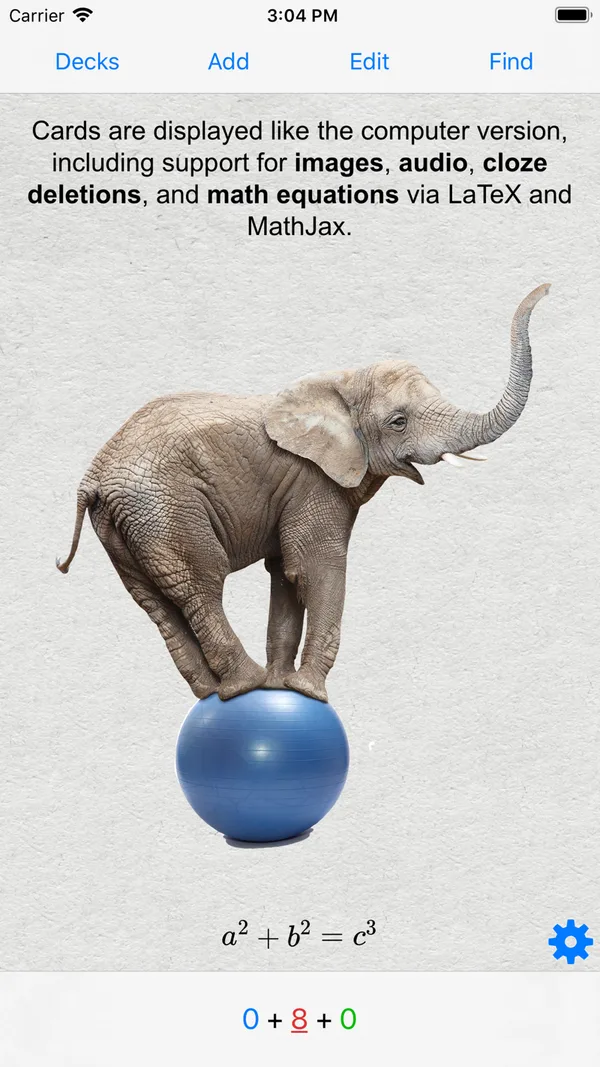
How it works: You build your own deck (or download a shared one). The algorithm shows cards at increasing intervals based on how well you remember them.
Strong on: retention (exceptional), topic depth (as deep as your deck).
Weak on: progression (you build your own), explanation quality (cards are only as good as you make them), adaptivity (you decide what to study).
Best for: medical students, language learners with specific vocabulary, anyone preparing for high-stakes memorization.
Skip if: you want to be told what to learn next.
Price: Free (desktop + Android), $25 one-time (iOS).
2. Brilliant — Best for STEM problem-solving
Brilliant teaches math, physics, CS, and adjacent topics through interactive puzzles — not passive lectures. Each lesson forces you to solve, not watch.
How it works: Pick a course ("Calculus Fundamentals"), work through bite-sized interactive problems. Drag sliders, click diagrams, solve stepwise.
Strong on: topic depth (deep on STEM), explanation quality (every problem shows its reasoning), progression (structured courses).
Weak on: habit formation (less gamified than Duolingo), adaptivity (fixed course paths), breadth outside STEM.
Best for: adults who want to actually understand math and physics, not just pass a test.
Skip if: you want humanities, arts, or languages.
Price: $149.99/year or $24.99/month.
3. Duolingo — Best for daily language habits
Duolingo is the gold standard for building a language-learning streak, and a case study in how far you can get on habit design alone.
How it works: Short daily lessons with heavy gamification — streaks, leagues, XP, gems. You translate sentences, tap word matches, speak phrases.
Strong on: habit formation (best in category), progression (clear levels), retention (with daily use).
Weak on: topic depth (most learners plateau around B1), explanation quality (grammar notes are thin), adaptivity (everyone takes the same path).
Best for: beginner to intermediate language learners who need external structure to maintain a streak.
Skip if: you're advanced, or you want to understand why a language works the way it does.
Price: Free (with ads), $6.99/month (Super), $13.99/month (Max with AI tutor).
4. Khan Academy — Best for free structured courses
Khan Academy is the closest thing the internet has to a free, unified school: K-12 math and science, introductory college topics, SAT/LSAT prep — all free.
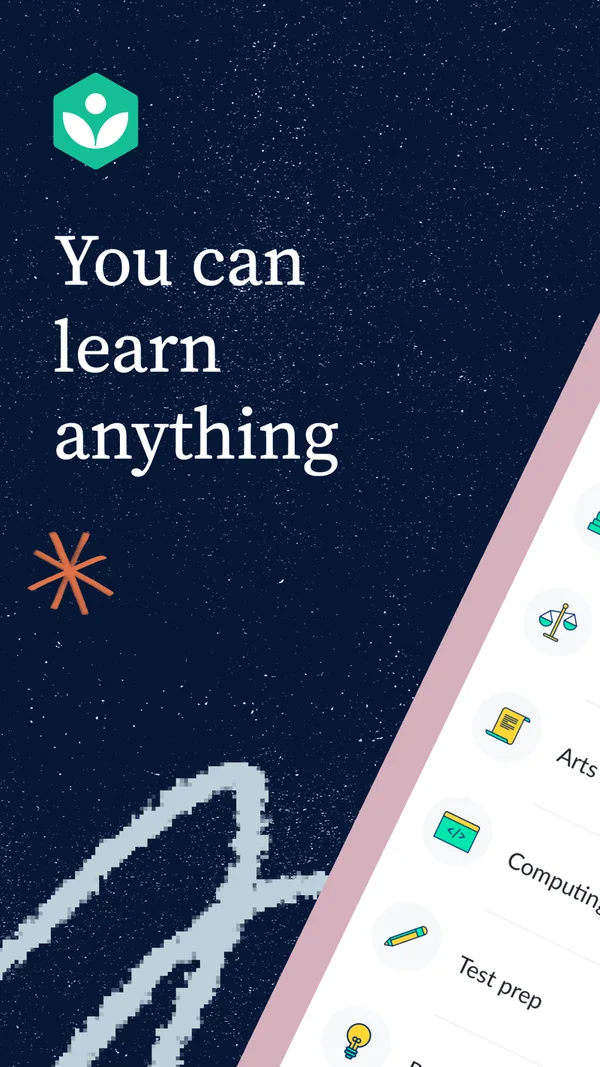
How it works: Watch a short video, work through practice problems. Progress tracked as mastery percentages per skill.
Strong on: progression (structured end-to-end), topic depth (full curriculum coverage), price (unbeatable).
Weak on: habit formation (no gamification), adaptivity (you follow the curriculum), retention (single-exposure, no SRS).
Best for: students catching up on a missed subject, self-learners who want a free, traditional course.
Skip if: you're bored by classroom formats, or looking for niche topics.
Price: Free.
5. Quizlet — Best for exam drill
Quizlet is the fastest way to go from "I have a textbook chapter" to "I have a working study tool." AI-generated flashcards, multiple practice modes, pre-built decks for almost every standardized test.
How it works: Paste notes or import material, Quizlet generates flashcards, games, and practice tests. Or use one of millions of existing decks.
Strong on: retention (with Learn mode), progression (test-oriented), depth (as deep as your source material).
Weak on: explanation quality (cards are definitions, not mechanisms), adaptivity (fixed sets).
Best for: students with an exam deadline.
Skip if: you're a long-horizon learner interested in understanding over memorization.
Price: Free tier, $7.99/month Plus.
6. Blinkist — Best for book summaries on commute
Blinkist compresses nonfiction books into 15-minute summaries ("blinks"). It's not learning in the strict sense — it's idea sampling.
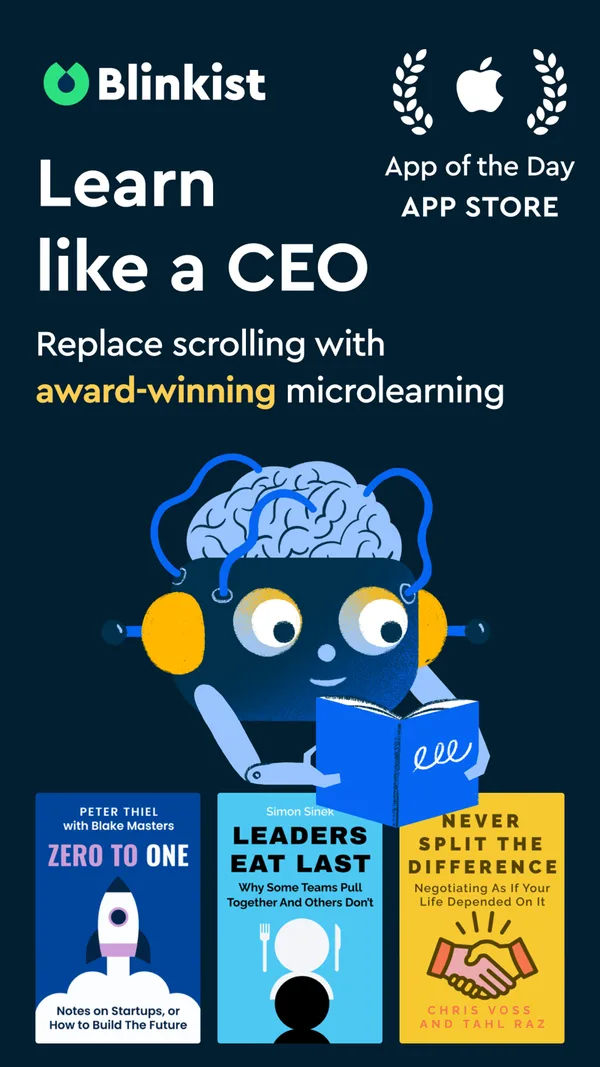
How it works: Browse summaries of ~6,500 books. Read or listen. Most titles come with a quick reference card.
Strong on: habit formation (fits a commute), progression (if you follow adjacent titles).
Weak on: topic depth (summaries only), retention (no SRS), explanation quality (heavily condensed), adaptivity (fixed summaries).
Best for: busy professionals who want broad exposure to ideas.
Skip if: you need to actually apply the material.
Price: $99.99/year.
7. MasterClass — Best for expert-led video
MasterClass isn't about mastery. It's about proximity — Neil deGrasse Tyson on the universe, Gordon Ramsay on technique, Margaret Atwood on writing. The production is cinema-grade.
How it works: Pick an instructor, watch their series (usually 15–25 lessons of ~10 minutes each). Occasional workbook assignments.
Strong on: topic depth (one expert, one subject), explanation quality (the best instructors are genuinely great).
Weak on: retention (passive video), adaptivity (fixed curriculum), habit formation.
Best for: people who want inspiration and high-quality storytelling from experts.
Skip if: you need rigorous skill-building or interactive practice.
Price: $120/year (Individual) to $240/year (Duo).
8. MillionWhys — Best for following your own curiosity
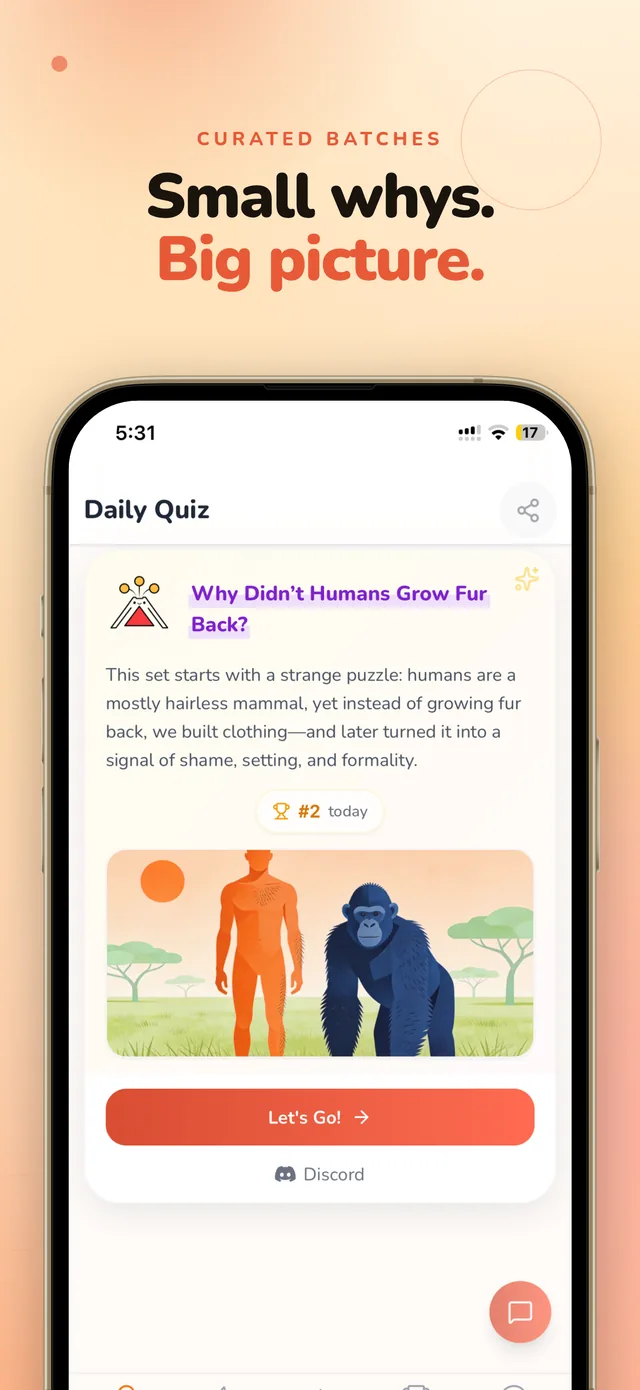
Most learning apps decide in advance what you should learn next. MillionWhys does something different: it asks what you're curious about, generates a new question from your curiosity, and saves that question — with your name on it — to a shared pool that other learners see.
It's not a syllabus. It's a live curiosity commons.
You can test the format without creating an account: answer the trivia question of the day, reveal the explanation for every choice, and compare your answer with today's global result.
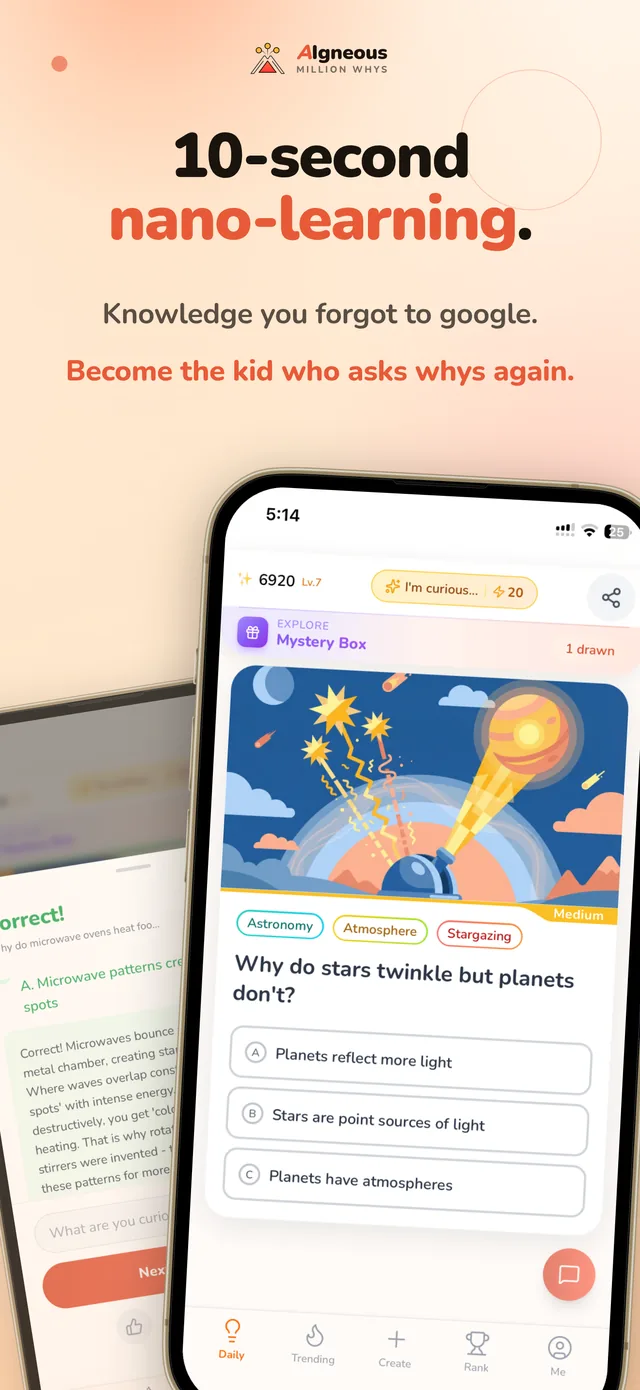
How it works:
- You answer a short multiple-choice question on any topic.
- Under the answer, every choice gets an explanation — not just the correct one. You learn the mechanism behind each option, whether you got it right or wrong.
- On the explanation screen, you can tap a follow-up. A new question is generated from your question and saved to the public pool with your nickname attached.
- The next day, another learner may see your question appear as their card — visibly attributed to you ("By [your name]").
- The question bank grows from real curiosity rather than a fixed content plan. Tags self-evolve (thousands and counting) as new questions arrive.
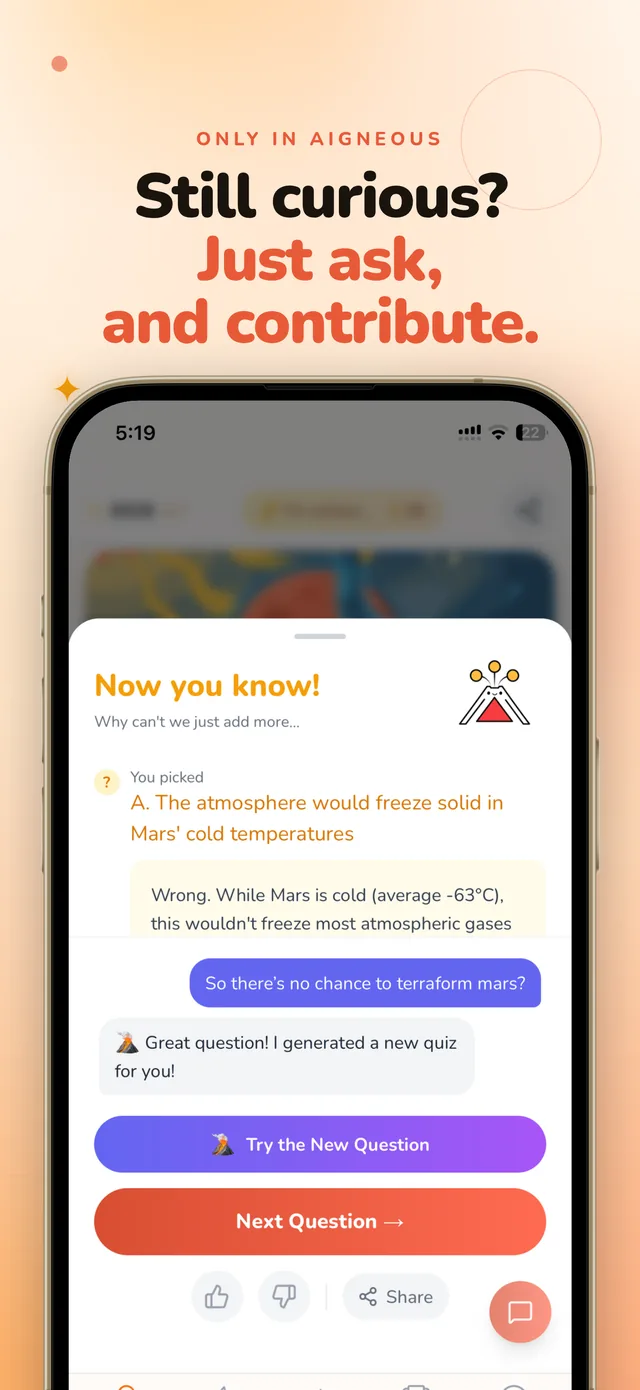
To keep the quality bar high, generated questions are guided by a curiosity rubric — six dimensions including whether a question has a familiar anchor, a retellable mechanism, and non-obviousness. It's not a free-for-all user wiki.
Strong on:
- Adaptivity — best in category. The app follows your questions, not the other way around.
- Explanation quality — you learn the mechanism behind every choice, not just the correct one.
- Community authorship — you can see whose curiosity shaped each card you're learning from.
Weak on:
- Structured progression — there's no "Level 1 → Level 10"; content is a graph, not a ladder.
- Credentialing — no certificates. If you need one, use Khan Academy.
Best for: curious adults who'd rather follow real questions than pre-planned curricula; people who enjoy seeing what other curious humans are asking; anyone who wants to understand the mechanism, not just the verdict.
Skip if: you're credential-chasing or need a fixed syllabus for an exam.
Price: Completely free. No stamina caps, no paywalled topics, no tiered content. The only optional paid tier is a monthly subscription that unlocks detailed progression stats — but if you just want to learn, you never have to pay.
Which learning app should you pick?
| If you want… | Use |
|---|---|
| Raw memorization power | Anki |
| STEM problem-solving with visual intuition | Brilliant |
| A daily language streak | Duolingo |
| Free structured courses | Khan Academy |
| Exam flashcard drill | Quizlet |
| Book ideas on commute | Blinkist |
| Expert video masterclasses | MasterClass |
| To understand the mechanism behind what you learn — and see what other curious humans are asking | MillionWhys |
There's no universal "best." There's the one that fits what you actually want out of your next 15 minutes.
FAQ
What's the best learning app for adults in 2026?
It depends on whether you want structure or flexibility. For structured courses, Khan Academy and Brilliant lead. For habit-driven language learning, Duolingo. For following your own curiosity through short-form questions, MillionWhys. For long-term retention of a specific body of knowledge, Anki is still unmatched.
Are learning apps actually effective?
Short-form apps are effective for the goals they're designed for — daily habit maintenance, vocabulary retention, exposure to new ideas. They're less effective as standalone replacements for deeper study. Used as a complement to reading or deliberate practice, they work.
What's the difference between MillionWhys and Brilliant?
Brilliant gives you structured interactive lessons on math, physics, and CS — you follow their curriculum. MillionWhys is adaptive to your own questions — you set the direction, and the follow-ups you ask become questions other learners see. Brilliant is depth-on-rails; MillionWhys is breadth-on-curiosity.
Is MillionWhys free?
Yes — completely. All learning content is free, no stamina caps, no paywalled topics. The only paid option is a monthly subscription that unlocks detailed progression tracking, but if you just want to learn, you never need to pay a cent.
What does "live curiosity commons" mean?
A learning pool where the questions aren't all written by an editor or an algorithm ahead of time — some are generated from real follow-up questions asked by other learners, and visibly attributed to them ("By [nickname]"). The pool grows as users ask. Agent curation keeps the quality bar high, so it doesn't drift into noise.
The bottom line
No single app is "best" at everything. Anki wins on retention, Brilliant on STEM depth, Duolingo on streaks, Khan on free structure. What those four share is a fixed curriculum — you follow their path.
If you'd rather the path followed you — if you want the next question to come from your own "why" (or a stranger's, with their name on it), and you want every choice explained instead of just marked — MillionWhys is built exactly for that. And it's free.
Either way: pick the app that matches the hour you'll actually spend, not the syllabus you think you should want.
Curious? Try one 👇
Why is the sky blue?
Jump into the daily quiz →Keep Exploring

Related Posts
App to Learn New Things: Curiosity, Not Cramming
Looking for an app to learn new things? Compare Million Whys, Brilliant, Khan, Blinkist, and Duolingo by learning moment, not hype.
Best Free Microlearning Apps 2026
Best free microlearning apps 2026: compare Duolingo, Khan Academy, Brilliant, Quizlet, Anki, Deepstash, and MillionWhys for tiny curiosity-led learning.
Best Mobile Learning Apps 2026: Curiosity Wins
Best mobile learning apps 2026 compared by learning unit, pressure, cost signals, and curiosity fit, from Duolingo and Khan Academy to MillionWhys today.