

Why Do Rocket Launches Need a Launch Window?
TL;DR
Rocket launches need a launch window because the rocket is not just trying to go up — it is trying to enter a very specific geometry. Earth is rotating, the target orbit may be tilted or moving, the target spacecraft may already be in space, and the mission may also be constrained by weather, safety rules, lighting, and recovery conditions.
That is why some missions get hours, some get minutes, and some get only seconds. A launch window is the overlap between orbital geometry, vehicle performance, and mission operations.
When a rocket launch is delayed by ten minutes, it can sound absurdly fragile. Airplanes leave late all the time. Why can't rockets do the same?
Because a rocket launch is not just a departure. It is an attempt to place a vehicle into a particular orbit, at a particular energy, often into a particular orbital plane, and sometimes into a chase with another spacecraft that is already moving at thousands of miles per hour. By the time a launch slips, the geometry may already have changed.
Curious? Try one 👇
Why is the sky blue?
Jump into the daily quiz →Rockets are not trying to go “up.” They are trying to arrive somewhere precise.
The easiest wrong mental model is that launch timing is mostly about weather. Weather matters, but it is not the main reason launch windows exist.
The deeper reason is orbital geometry. A mission usually needs some combination of:
- a specific inclination (the tilt of the orbit),
- a specific orbital plane,
- a specific insertion energy,
- a specific lighting condition,
- or a specific phasing relationship with another object.
Those requirements do not line up at every moment. Earth keeps turning under the target plane. The Moon keeps moving. The International Space Station keeps racing around Earth. So the rocket only gets certain moments when the geometry is good enough.
How teams actually set a launch window
In practice, launch teams are looking for the overlap of several constraints, not a single magic number.
1. The target orbit or target mission
The first question is: what exactly is this mission trying to hit?
- A cargo mission to the ISS is trying to reach the station's orbital plane and then catch the station.
- An Earth-observing satellite may need a particular sun-synchronous orbit so that it crosses the equator at roughly the same local solar time every day.
- A geostationary transfer mission may have more flexibility because the spacecraft can raise and shape its orbit later.
- A lunar mission may need to leave Earth on a trajectory that lines up with where the Moon will be at arrival, while also satisfying lighting and recovery constraints.
2. The launch site's position on a rotating Earth
Launch sites are not interchangeable backgrounds. Their latitude and geography matter.
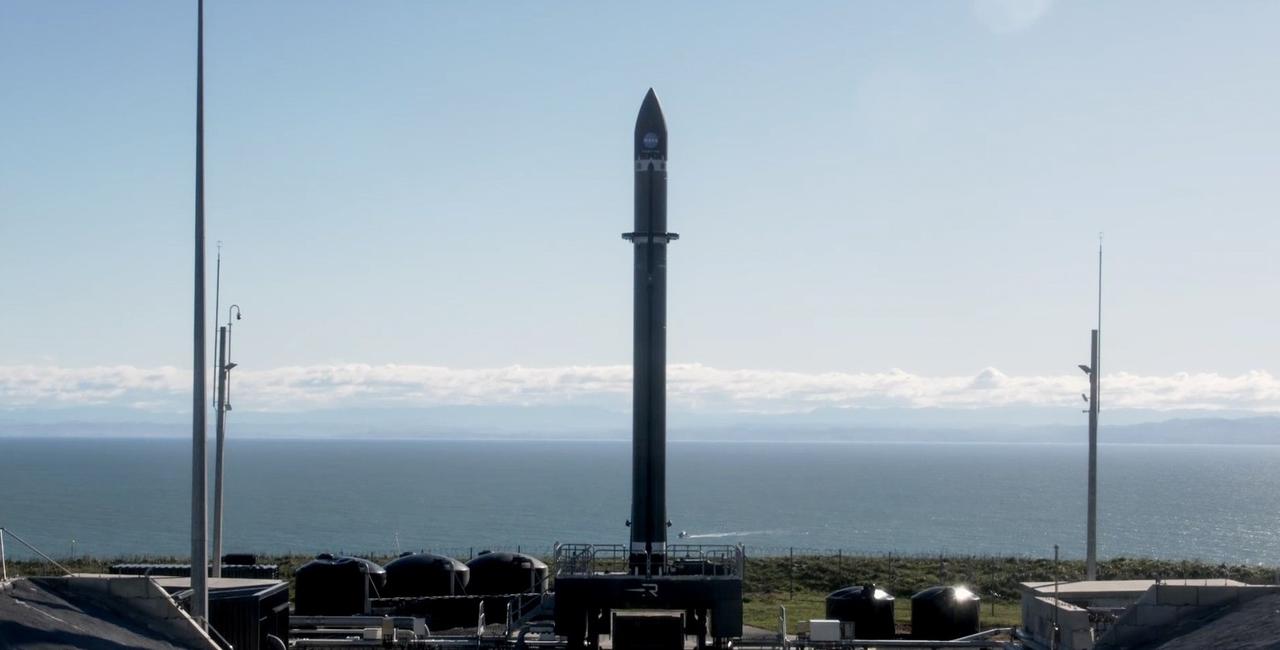
NASA's launch-site guidance is blunt about this: Cape Canaveral is ideal for west-east launches, while Vandenberg is preferred for north-south launches. That is why many low-inclination missions leave Florida, while many polar and sun-synchronous missions leave California.
The reason is not branding. It is geometry and safety. Earth’s rotation gives a useful eastward velocity boost at lower inclinations, while polar missions need north-south geometry and clean downrange corridors.

3. If the mission is chasing something, the timing gets much harsher
If your target is the ISS, it is not enough to reach the same altitude someday. You need to enter the right orbital plane at the right time so that the spacecraft can rendezvous on the planned timeline.
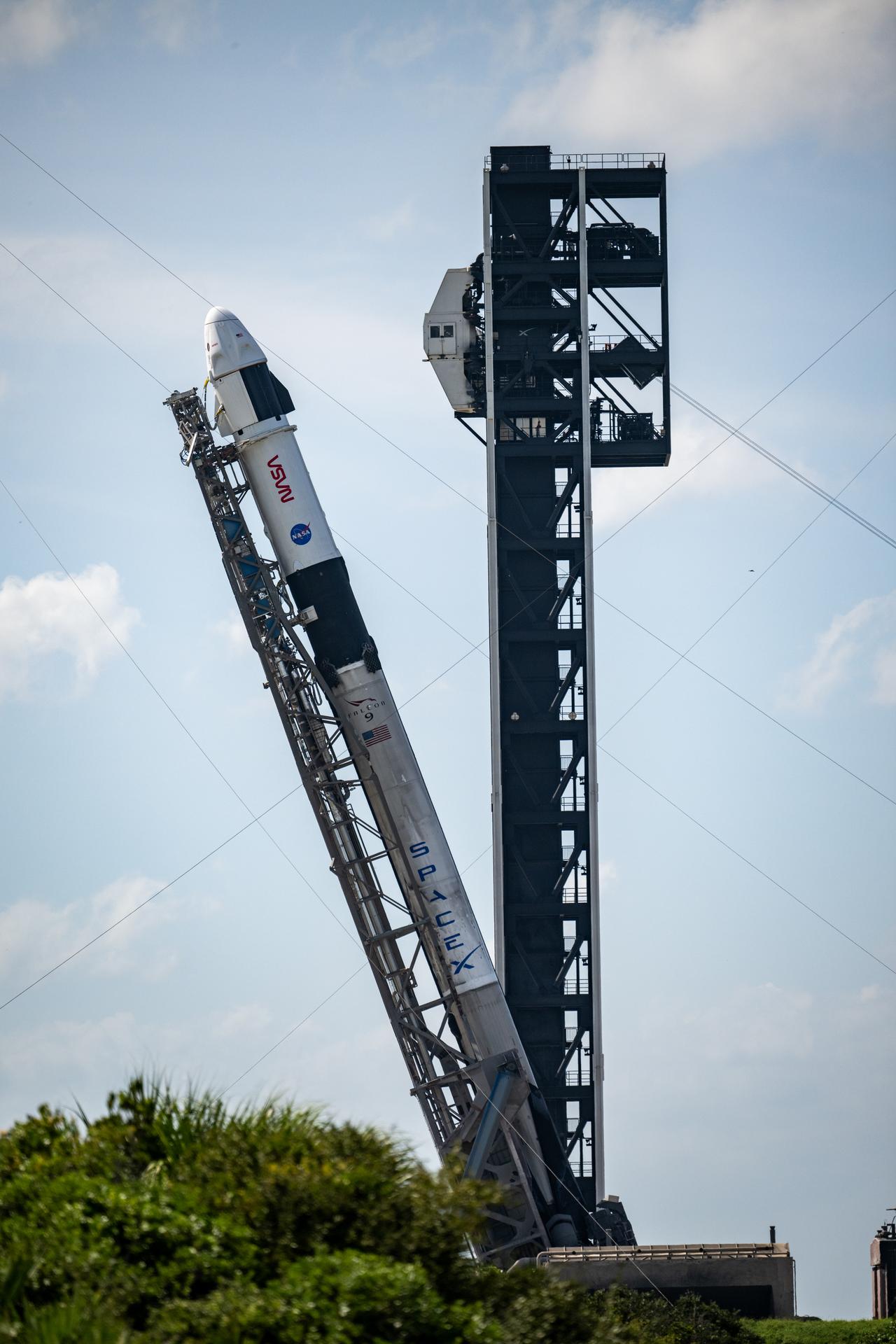
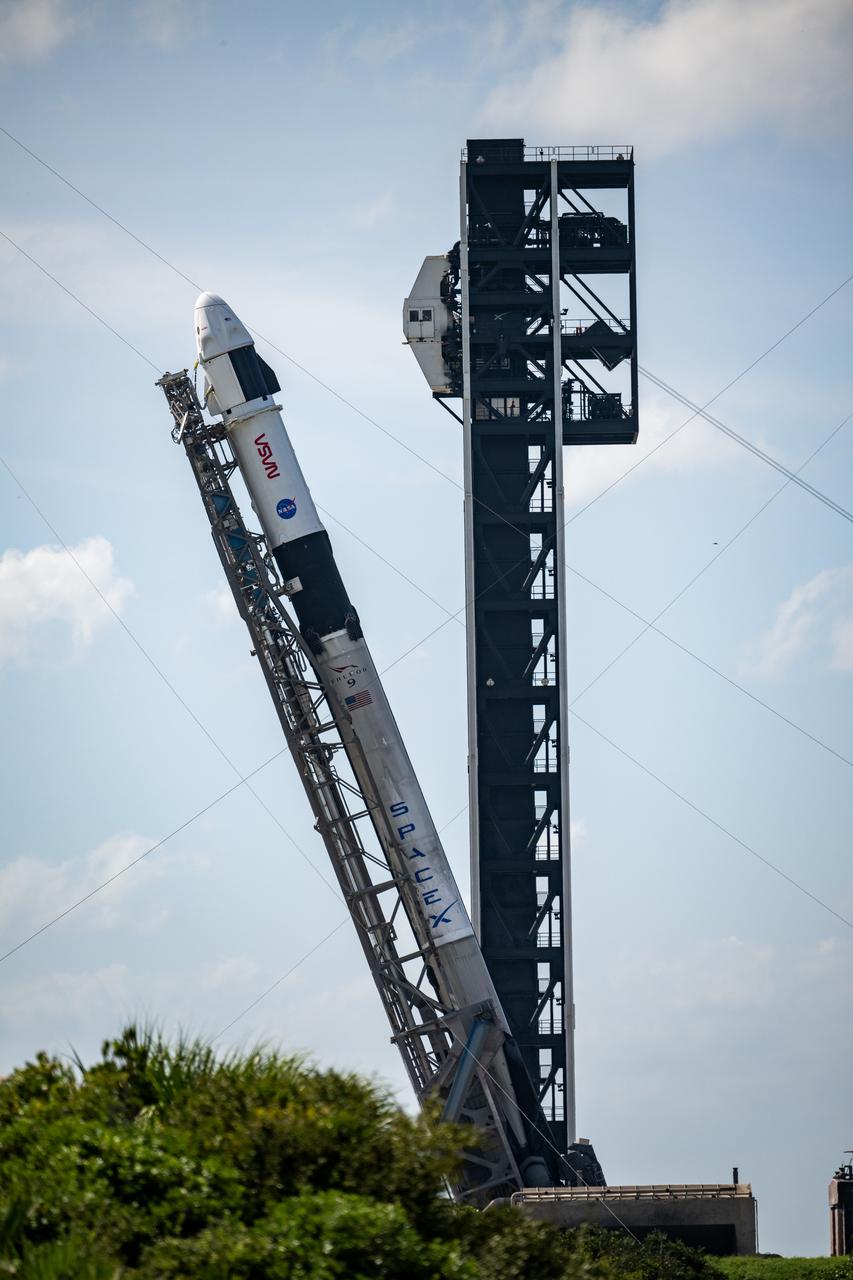
That is why NASA has repeatedly described some station missions as having an instantaneous launch window. In one Dragon cargo mission update, NASA said the window was effectively one second. Miss that moment, and the launch team cannot simply shrug and go a few minutes later. The station will have moved, the phasing will be wrong, and the carefully planned rendezvous profile may no longer work without major changes.
4. Then the real-world operational rules get layered on top
Even when orbital mechanics would allow a launch, operations may narrow or widen what is actually usable:
- weather and lightning rules,
- range availability and safety corridors,
- crew and console staffing limits,
- first-stage recovery conditions,
- upper-stage battery and coast limits,
- landing or splashdown constraints for crewed missions.
NASA's explanation for the Ares I-X test flight is useful here. It had a four-hour launch window, not because the rocket had no physics constraints, but because range allotment, weather, winds, and operations were major parts of the decision. In other words, a long launch window does not mean the mission is easy. It may mean the geometry is relatively tolerant and the operations are doing more of the limiting.
How long is a launch window, really?
There is no single standard length. Real examples vary wildly.
ISS / Dragon: effectively 1 second
NASA has described station cargo launches where Falcon 9 and Dragon had to lift off at an exact second because the station was already overhead in the right geometry. This is the cleanest example of a launch window being driven by rendezvous physics.
OCO-2: 30 seconds
NASA's launch material for the Orbiting Carbon Observatory-2 said its Delta II launch from Vandenberg targeted the opening of a 30-second launch window into a 98.2° polar orbit.
That is a great reminder that even without an ISS-style rendezvous, an Earth-observation mission can still get a very tight window if its orbital-plane and mission requirements are strict enough.
Landsat 8 / LDCM: 48 minutes
Now the surprise: NASA's launch material for the Landsat Data Continuity Mission said it had a 48-minute launch window — and it was also going to a 98.2° polar orbit.
That contrast matters. Two missions can target essentially the same inclination and still have radically different windows. So the real driver is not inclination alone. It is the full bundle of constraints: orbital-plane timing, local solar time requirements, tolerance for post-launch adjustment, constellation or phasing rules, and mission-specific design choices.
Why launch site and orbit are tied together
Launch windows are partly answers to the question: when can this specific place on Earth send a rocket into that specific orbit efficiently and safely?
Cape Canaveral and lower-inclination launches
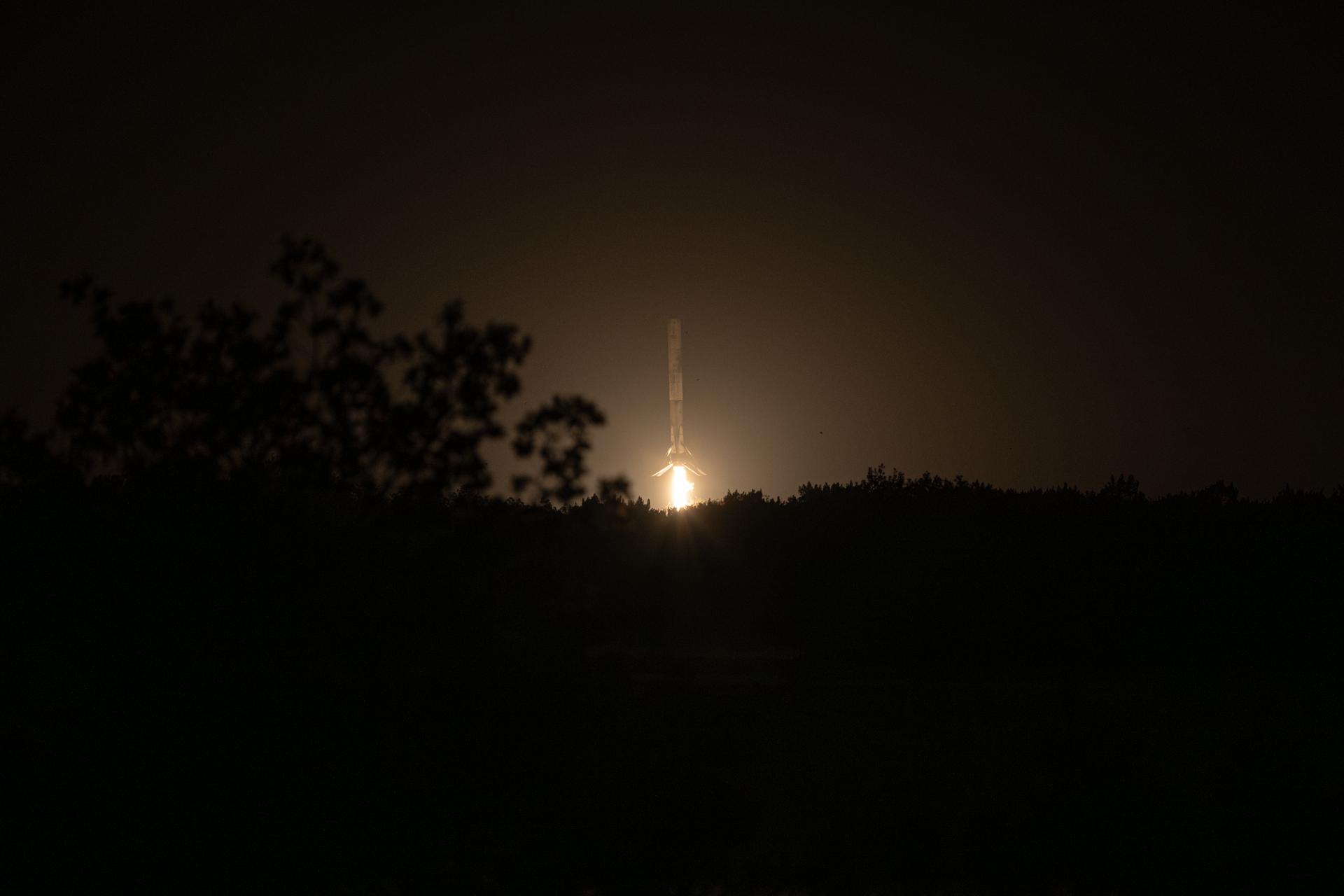
Florida benefits from Earth's eastward rotation and wide Atlantic downrange corridors. That makes it a natural home for missions that want easterly launches and lower-inclination orbits.
Vandenberg and polar / sun-synchronous launches
Vandenberg is preferred for north-south trajectories. If you want to go near-polar or sun-synchronous, that geometry is much friendlier from California than from Florida.
So yes, launch windows are partly about when a mission can fly — but also about where it can fly from in the first place.
How vehicle performance affects the window
This is the part that gets oversimplified most easily.
Rocket performance usually does not directly set the launch window the way orbital geometry does. But it absolutely changes how much flexibility a mission has.
A useful way to think about it:
- Geometry sets the ideal launch opportunity.
- Performance margin determines how far from ideal you can drift and still make the mission.
If a payload is heavy, the destination is demanding, and the mission already needs a lot of energy, then the vehicle may have very little extra margin for:
- launching a bit off the optimal time,
- accepting extra steering losses,
- making a dogleg for safety reasons,
- carrying a long upper-stage coast,
- or cleaning up non-ideal insertion later.
If the payload is lighter or the rocket has more performance headroom, the mission may be able to tolerate more deviation from the perfect geometry. In that sense, vehicle capability can widen the practical window — not by changing orbital mechanics, but by making non-optimal solutions survivable.
That is why it is more accurate to say:
Payload mass and rocket performance affect launch windows mostly indirectly, through margin.

Why rockets cannot just “go a little later” like airplanes
An airplane that leaves late is still using the same airport network on the same planet. A rocket that leaves late may be trying to enter an orbital plane that is no longer aligned, chase a spacecraft that has already moved, or depart Earth on a trajectory whose energy and geometry are no longer valid.
That is the real difference. Delaying a rocket launch is not just a schedule slip. It can be a different problem.
Launch window vs. launch period
One subtle but useful distinction:
- A launch window is the usable time on a given day.
- A launch period is the broader span of days on which launch opportunities exist.
Lunar missions often work this way. A mission may have a launch period spanning days or weeks, but only certain daily windows inside that period. That happens because Earth-Moon geometry, arrival conditions, and recovery constraints all have to line up together.
Watch a few real launches
What launch windows really reveal
Launch windows look like scheduling trivia until you zoom in. Then they turn into a compact lesson in orbital mechanics, site geography, vehicle capability, and operational reality.
That is why one mission can get four hours, another forty-eight minutes, another thirty seconds, and another one second.
The rocket is not asking, “Is now convenient?”
It is asking, “Is the universe arranged correctly right now?”
FAQ
Why can’t they just launch 10 minutes later?
Sometimes they can. Sometimes they absolutely cannot. If the mission only needs a broad orbital target and has enough margin, a later launch may still work. But if the mission depends on a precise orbital plane crossing, a rendezvous timeline, or a narrow translunar geometry, ten minutes can be too late.
Why are ISS launches often so much tighter?
Because they are not just trying to reach low Earth orbit. They are trying to reach the ISS orbital plane at the right time and with the right phasing so the spacecraft can catch the station efficiently. That makes the timing much harsher than for missions that only need a general orbit.
If two missions go to the same inclination, shouldn’t they have the same window?
No. OCO-2 and Landsat are a good example of why. Both targeted roughly 98.2° polar or sun-synchronous geometry, but one had a 30-second window and the other had a 48-minute window. Inclination is only one part of the problem. Plane timing, local solar time, post-launch adjustment tolerance, and mission design matter too.
Does a bigger rocket automatically mean a wider window?
Not automatically. Orbital geometry still sets the core opportunity. But more vehicle performance or more payload margin can make a mission more tolerant of small timing or trajectory penalties, which can widen the practical window.
What is the difference between a launch window and a launch period?
A launch window is the usable time on a specific day. A launch period is the broader span of dates when those opportunities exist. A lunar mission, for example, may have a launch period stretching across weeks, with only certain daily windows inside it.
What does this have to do with AIgneous Million Whys?
AIgneous Million Whys is built for questions exactly like this: familiar events that look like scheduling details at first, but turn out to depend on deeper geometry, constraints, and system design. A rocket launch window is not just a timetable quirk. It is a compact lesson in how physics decides what is possible.
Curious? Try one 👇