

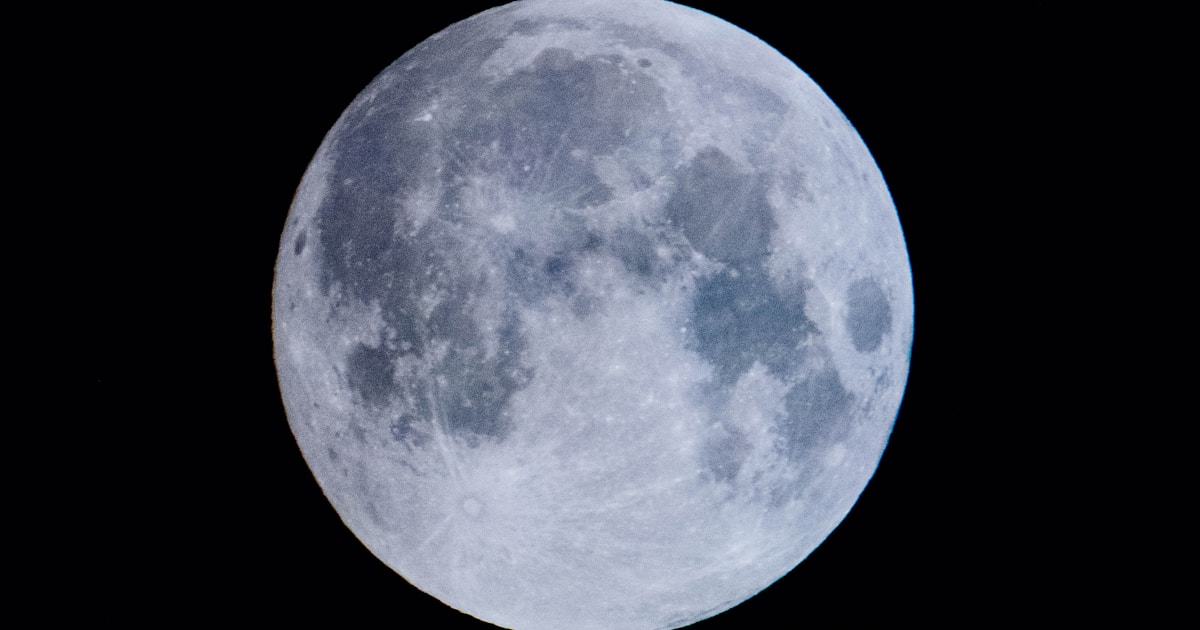
What If an Asteroid Hits the Moon? The 2024 YR4 Story
What If an Asteroid Hits the Moon?
Breaking News (February 2026) — Scientists just published a fascinating study about what would happen if asteroid 2024 YR4 actually hits our Moon on December 22, 2032. Spoiler: it would be spectacular.
But wait — why is an asteroid aiming at our Moon? And should we be worried?
The Discovery That Scared Everyone
In December 2024, astronomers discovered a space rock about 60 meters wide — roughly the size of a 20-story building. They named it 2024 YR4.
At first, scientists calculated a 3.1% chance it would hit Earth in 2032. Headlines went wild. People panicked.
Then came the plot twist.
Curious? Try one 👇
Why is the sky blue?
Jump into the daily quiz →Wait, It's Going to Hit the Moon Instead?
After more observations — including data from the James Webb Space Telescope — scientists ruled out an Earth impact. Phew!
But they discovered something else: there's now a 4.3% chance it will hit the Moon on December 22, 2032.
That's still a 95.7% chance it misses entirely. But 4.3% is high enough that scientists are already planning how to watch.
What Would We See From Earth?
A Flash Brighter Than Any Star
If 2024 YR4 hits the Moon, it would create a flash visible to the naked eye — reaching magnitude -3 to -5. That's:
Imagine looking up at the Moon and seeing a sudden bright spot appear. That's what we'd witness.
A 1-Kilometer Crater
The impact would carve out a crater roughly 1 kilometer (0.6 miles) wide on the lunar surface. It would be the most energetic lunar impact ever recorded in human history.
Moonquakes We Could Detect
Seismometers on the Moon would pick up enormous Moonquakes within 7-15 minutes of impact. Any lunar landers or rovers in the area would feel the shake.
Meteors From Moon Rocks!
Here's the wildest part: the impact would launch about 108 kilograms of lunar rocks and dust fast enough to escape the Moon's gravity. Some of this debris would reach Earth.
2-8 days after impact, we could see a meteor shower made of Moon rocks streaking across our sky. Some fragments might even survive to become meteorites we could find on the ground.
Why Does This Matter?
It's a Science Goldmine
Scientists are actually excited about this possibility. Why?
It's a Reality Check
This asteroid reminds us that space rocks are constantly flying around our cosmic neighborhood. The same object that might hit the Moon could have hit Earth under slightly different circumstances.
What Happens Next?
Astronomers will be able to observe 2024 YR4 again starting in 2028 as it comes back around. By then, they'll refine the calculations to know:
The Best Seats in the House
If the impact happens, the Pacific hemisphere will have the best view. Observatories in Hawaii (like the famous Keck and Subaru telescopes) are perfectly positioned.
For most of North America, the Moon would be visible near dawn. Europe and Asia? Unfortunately, it would be daytime or the Moon would be too low.
Fun Fact
The Moon is actually covered in craters from billions of years of impacts — it just doesn't have weather or plate tectonics to erase them like Earth does. If 2024 YR4 hits, it would add one more to the collection... and we'd be the first humans ever to watch it happen in real-time.
---
Mark your calendar: December 22, 2032. Whether it hits or misses, astronomy fans worldwide will be watching the Moon that night.
<div class="mw-keep-reading"><h2>Keep reading</h2><ul><li><a href="/blog/dark-matter-map-webb-telescope-2026">Scientists Just Mapped the Invisible Universe - Here Is What They Found</a></li><li><a href="/blog/life-molecule-thiepine-interstellar-space-2026">Scientists Found a Building Block of Life Floating in Space - 27,000 Light-Years Away</a></li><li><a href="/blog/lyrid-meteor-shower-2026-when-where-how-to-watch">Lyrid Meteor Shower 2026: When, Where, and How to Watch the Peak</a></li><li><a href="/blog/space-trivia-questions-and-answers">Space Trivia Questions and Answers: Cosmic Questions With the Why</a></li><li><a href="/trivia-question-of-the-day">Trivia Question of the Day</a></li></ul></div>
Curious? Try one 👇
Why is the sky blue?
Jump into the daily quiz →Keep Exploring

Why can astronauts jump so high on the Moon?
Physics in Daily Life
Approximately how much laser power would be required for an astronaut on the Moon to see a laser spot from Earth with the naked eye?
Astronomy & Space
Could all the planets in our solar system fit between Earth and the Moon?
Astronomy & Space
Related Posts
Lyrid Meteor Shower 2026: When, Where, and How to Watch the Peak
The 2026 Lyrid meteor shower peaks April 21-22 in nearly moonless skies. Exact US-timezone viewing times, where to look in Lyra, and the 2,700-year history of humanity's oldest recorded meteor shower.
Earth Day 2026: 12 Weird Whys About the Planet You Live On
From a 19.5-hour day stuck for 1.5 billion years to a mantle-wind black hole beneath Tibet, 12 mechanism-rich, verifiably true facts about Earth — each a 'small why' that changes how you see the planet. Earth Day 2026 edition.
Test Your Knowledge
Want to test what you learned about Space & Astronomy?
Take a quiz on this topic →