

Scientists Found a Building Block of Life Floating in Space - 27,000 Light-Years Away
Scientists Found a Building Block of Life Floating in Space
February 2026 - Here is a question that has puzzled scientists for decades: Where did the ingredients for life come from?
We now have a stunning new clue. Scientists just detected a complex molecule essential for life floating in an interstellar cloud - 27,000 light-years from Earth, near the center of our galaxy.
And it existed there before any nearby stars even formed.
The Discovery
The molecule is called thiepine (C₆H₆S). Never heard of it? Here is why it matters:
This is the first time scientists have found such a complex, life-related sulfur compound floating between the stars.
Curious? Try one 👇
Why is the sky blue?
Jump into the daily quiz →Where They Found It
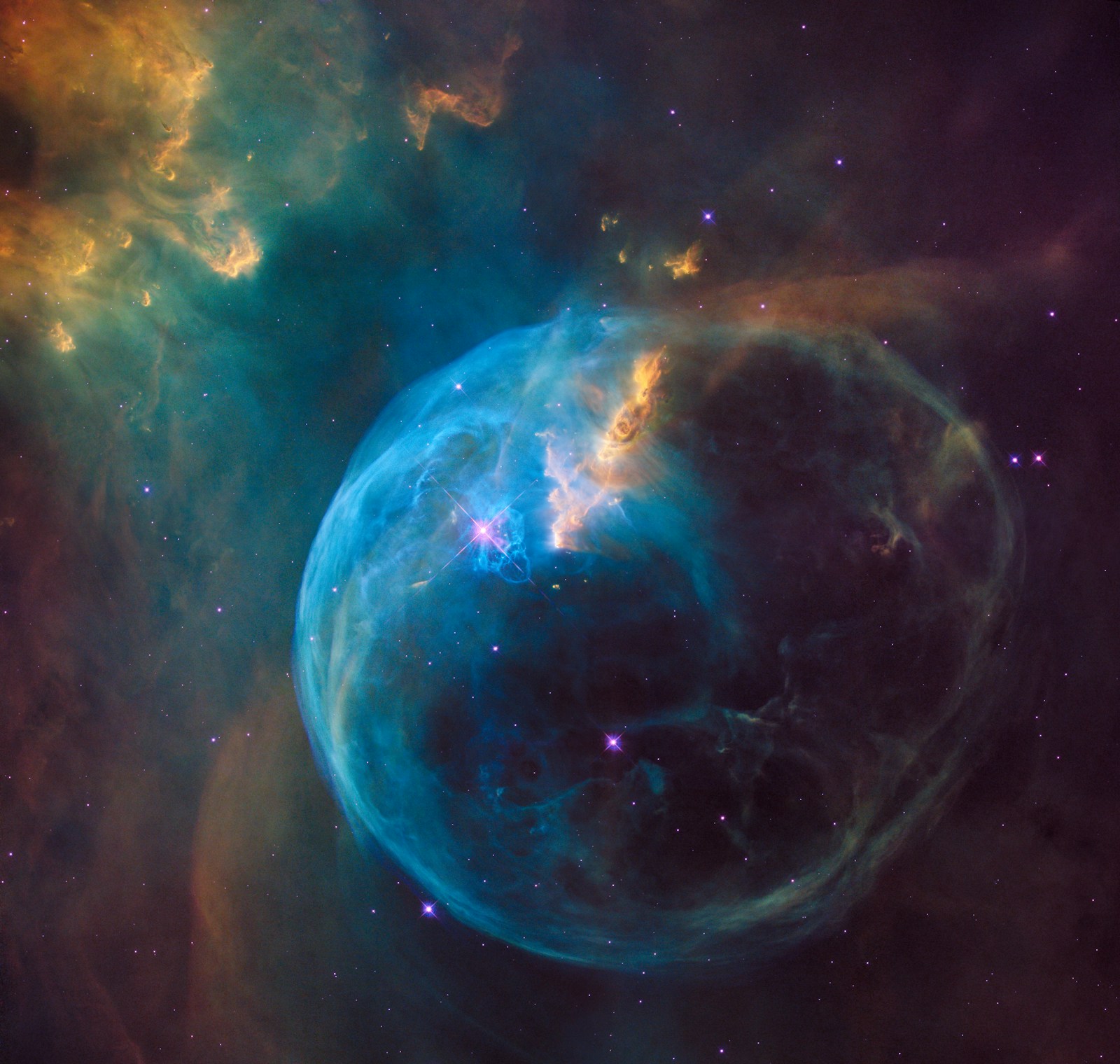
The molecule was detected in a place called G+0.693–0.027 - a molecular cloud located about 27,000 light-years away, near the Milky Way's center.
What is a molecular cloud? Think of it as a giant cosmic nursery - a cold, dense region of gas and dust where new stars (and their planets) will eventually be born.
Here is the key part: this particular cloud is starless. No stars have formed there yet. Which means this complex life-related molecule existed before any solar systems formed in that region.
How Do You Find a Molecule 27,000 Light-Years Away?
Every molecule has a unique fingerprint - a specific pattern of radio waves it emits.
Scientists at the Max Planck Institute first created thiepine in the lab by zapping a related chemical with 1,000 volts of electricity. They measured its exact radio signature.
Then they pointed radio telescopes in Spain at the distant molecular cloud and searched for that same signature in the cosmic static.
They found it.
Why This Changes Everything
For years, scientists found complex organic molecules in meteorites - space rocks that fell to Earth. These contained sulfur-bearing ring compounds similar to thiepine.
But they never found such complex molecules actually floating in space - until now.
This discovery bridges a crucial gap:
> "This is the first unambiguous detection of a complex, ring-shaped sulfur-containing molecule in interstellar space - and a crucial step toward understanding the chemical link between space and the building blocks of life." - Lead author Mitsunori Araki, Max Planck Institute
Life's Ingredients Are Everywhere
This is not the only recent discovery suggesting life's building blocks are scattered across the cosmos:
The picture emerging is profound: the chemistry needed for life is not rare or special. It happens naturally, all over the universe, in the cold darkness between stars.
What Does This Mean?
Consider this: The molecular cloud where thiepine was found has no stars yet. Someday, millions of years from now, stars will form there. Planets will coalesce from the same gas and dust.
And those planets will already have access to pre-made building blocks of life floating in the cloud they formed from.
This suggests that:
The Cosmic Perspective
Look at your hand. It contains sulfur - about 140 grams in the average human body.
That sulfur came from ancient stars that exploded. But the complex sulfur molecules that became part of living things? They may have first assembled in cold, dark clouds floating between the stars - billions of years ago, before our sun even existed.
You are not just on the universe. You are made of it.
---
The discovery was made using the IRAM 30-meter and Yebes 40-meter radio telescopes in Spain, with laboratory confirmation from the Max Planck Institute for Extraterrestrial Physics.
<div class="mw-keep-reading"><h2>Keep reading</h2><ul><li><a href="/blog/space-quiz-questions-and-answers">Space Quiz Questions and Answers, Explained</a></li><li><a href="/blog/space-trivia-questions-and-answers">Space Trivia Questions and Answers: Cosmic Questions With the Why</a></li><li><a href="/blog/this-day-jan-31-ham-first-primate-in-space">This Day in Why: Ham the Chimp - Why Do We Send Animals to Space?</a></li><li><a href="/blog/interesting-facts-about-chocolate">Interesting Facts About Chocolate Chemistry</a></li><li><a href="/trivia-question-of-the-day">Trivia Question of the Day</a></li></ul></div>
Curious? Try one 👇
Why is the sky blue?
Jump into the daily quiz →Keep Exploring
Why do scientists think Jupiter's moon Europa might harbor life?
Astronomy & Space
Why does the fact that life exists on Earth make scientists think life on other worlds is possible?
Astronomy & Space
How can a telescope tell if a planet light-years away might have life, without ever visiting it?
Technology
Test Your Knowledge
Want to test what you learned about Space & Astronomy?
Take a quiz on this topic →