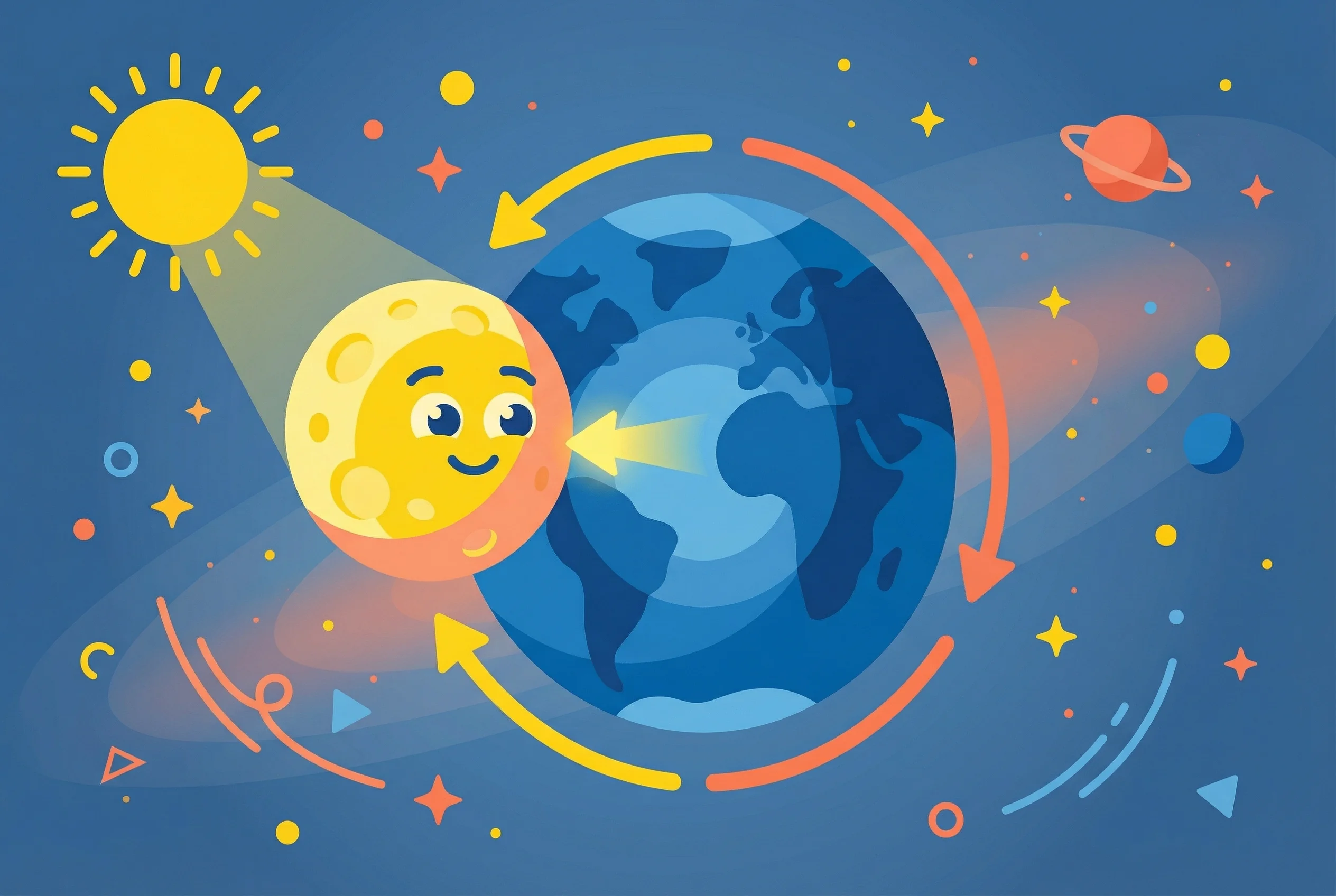

Skip to content
★ Space Trivia

Space Trivia Questions & Answers

17 cosmic questions — tap any option to see if it is right and why.

Easy
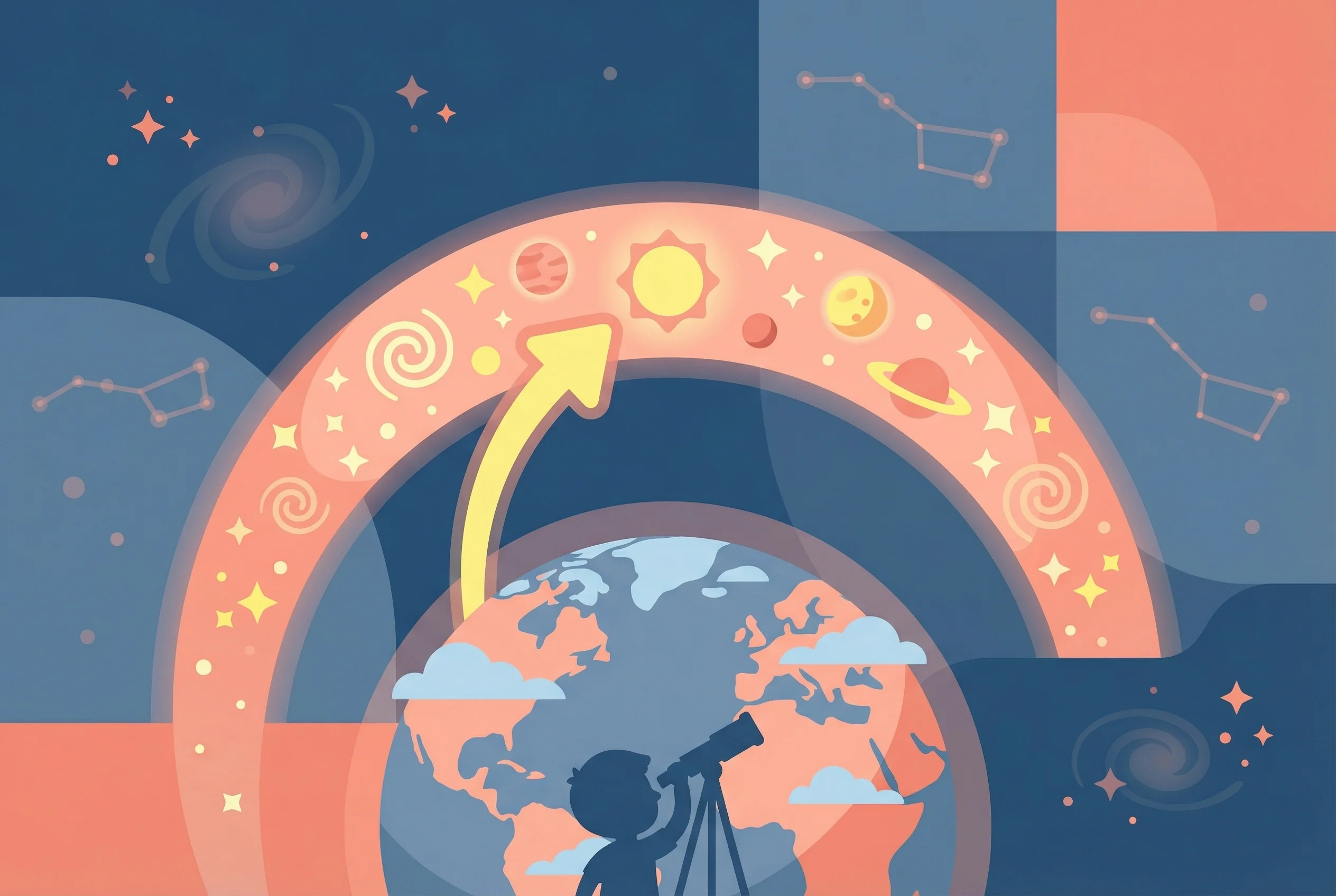
Why can we see the Milky Way?
Easy
Why can we see the Milky Way?
#nightphotography#astronomy#galaxies
AWe are inside it
Correct — The Milky Way is our galaxy—we're inside it! The band of light we see is looking edge-on through the galactic disk (100,000 light-years across). We're in a spiral arm ~26,000 light-years from the center.
NASA explanation
BIt's brightest galaxy
Not quite. A galaxy's brightness does not explain the band across our sky. We see many stars lined up along the disk because we are looking through our own galaxy from inside it.
CReflects sunlight to Earth
Not quite. The band is the combined light of distant stars. Those stars produce their own light; the Milky Way is not a surface reflecting our Sun.
Answer this question
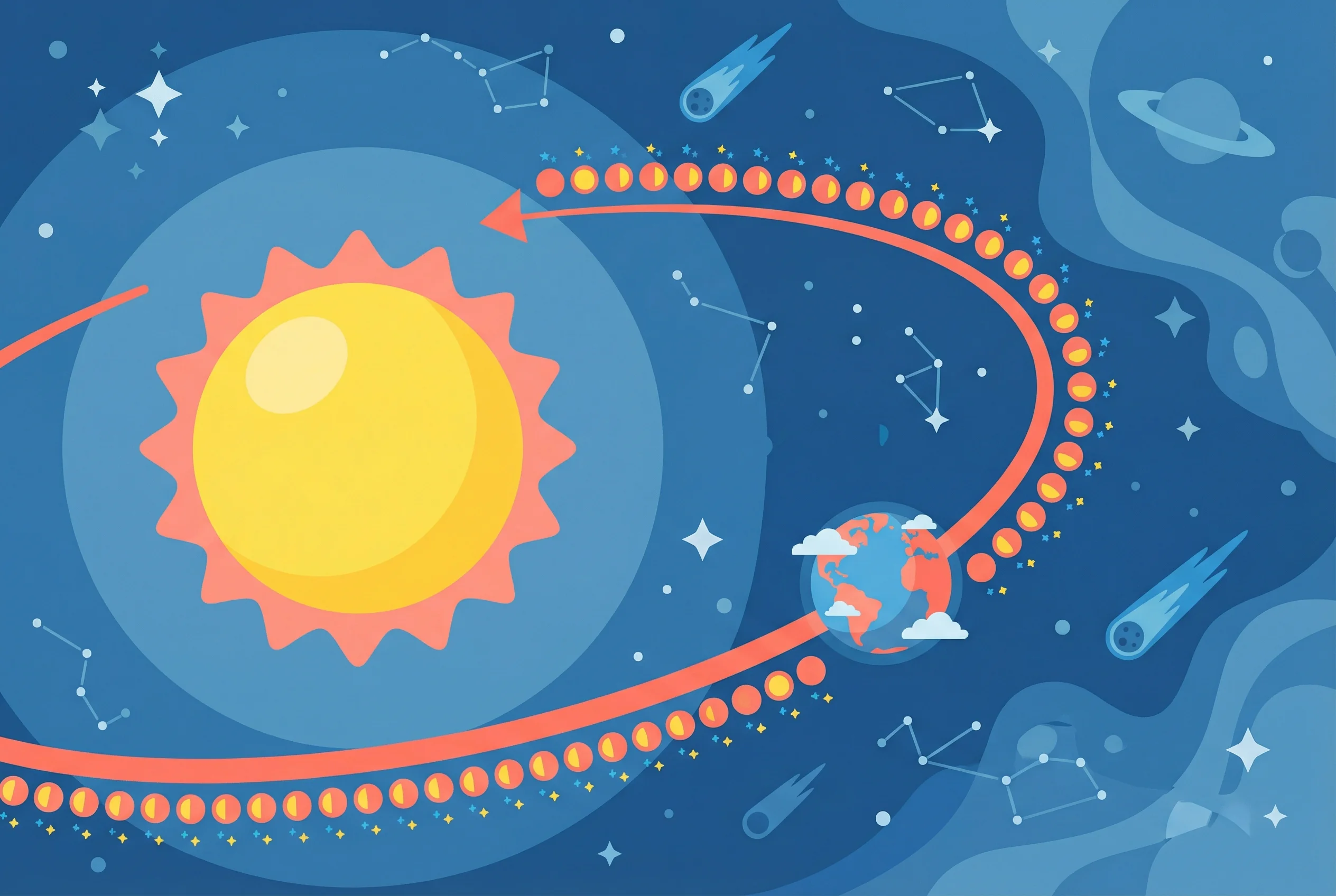
Why does a year have 365 days?
Easy
Why does a year have 365 days?
#earth#astronomy#space
AEarth rotates 365 times yearly
Not quite. Rotation gives us the day, while orbiting the Sun gives us the year. Counting rotations describes their relationship; it does not make rotation the cause of Earth's orbital period.
BTime for Earth to orbit the Sun
Correct — A year is defined by how long Earth takes to complete one full orbit around the Sun - approximately 365.25 days. This is determined by Earth's orbital distance (93 million miles) and speed (67,000 mph).
NASA explanation
CThe Moon's cycle determines it
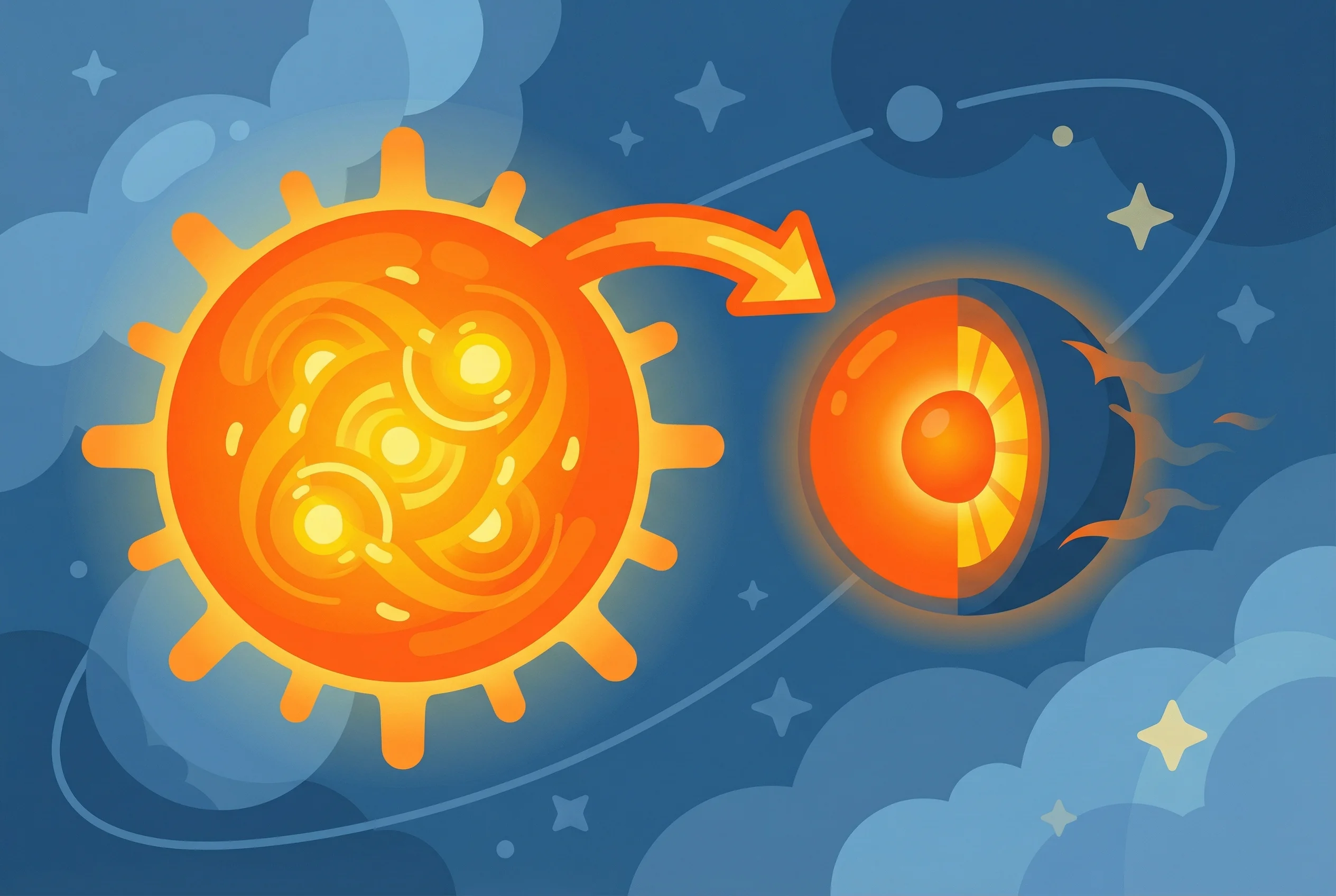
Not quite. The Moon's repeating phases help define a lunar month. A solar year follows Earth's journey around the Sun, so twelve lunar months do not exactly fill it.
Answer this question
Why do stars die?
Easy
Why do stars die?
#astronomy#supernovae#astrophysics
ANuclear fuel depletes
Correct — Stars shine through nuclear fusion—hydrogen fusing to helium in cores. Eventually fuel exhausts. Low-mass stars (like sun): become red giants, shed outer layers (planetary nebulae), leave white dwarf cores.
NASA explanation
BSpace friction slows them
Not quite. A star is not a spinning object that shines until friction stops it. Its energy comes from nuclear fusion, and its evolution depends on how fuel and pressure change inside it.
CBlack holes consume them
Not quite. A nearby black hole can disrupt a star, but stars also reach the ends of their lives without meeting one. Changes in their nuclear fuel explain the ordinary stellar life cycle.
Answer this question
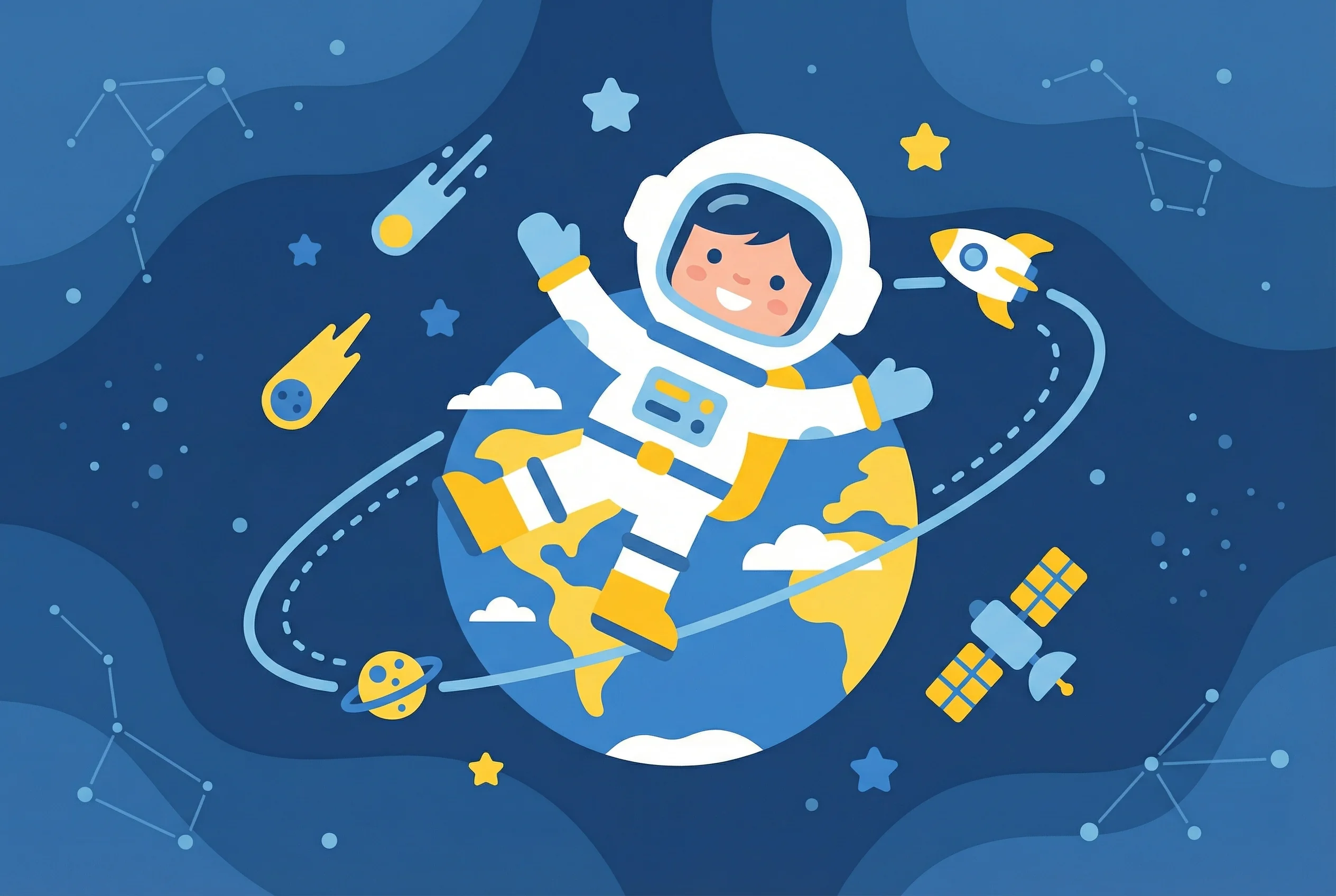
Why do astronauts float in space?
Easy
Why do astronauts float in space?
#physics#space#astronauts
AThey're falling with the ship
Correct — Astronauts and their spacecraft are constantly falling toward Earth but moving sideways fast enough to keep missing it—that's orbit! Everything falls together at the same rate, creating weightlessness. It's like being in a falling elevator!
NASA explanation
BNo gravity exists in space
Not quite. Earth's gravity still acts at the space station. Astronauts float because they and the station fall together, so the floor is not continually pushing up on them as it does on Earth.
CShip engines cancel gravity
Not quite. The station does not need engines continuously pushing against gravity to make astronauts float. Orbital motion and shared free fall produce the effect even when the engines are off.
Answer this question
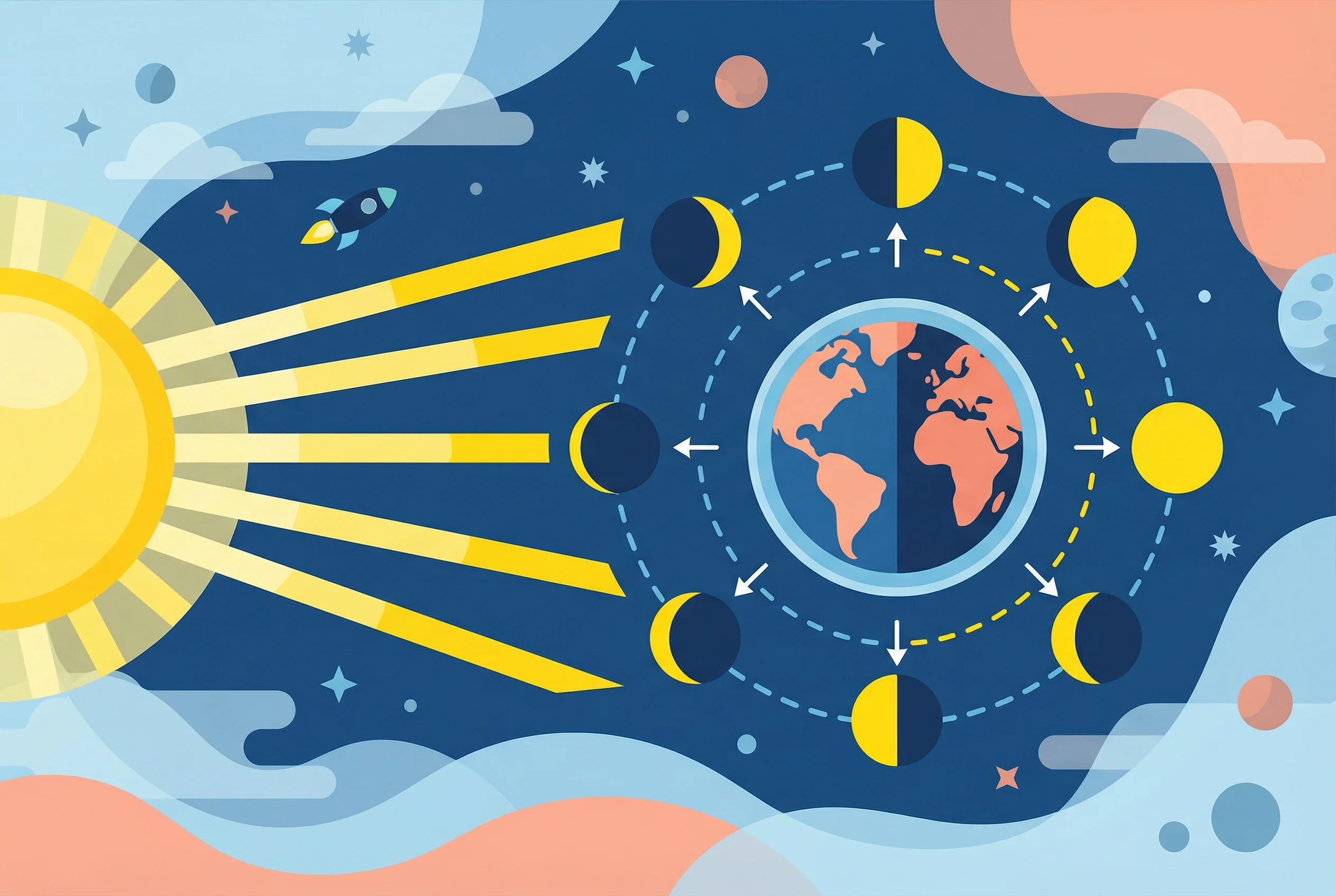
Why does the moon have phases?
Easy
Why does the moon have phases?
#astronomy#moon#stargazing
AEarth's shadow covers parts
Not quite. Earth's shadow causes a lunar eclipse, not the ordinary monthly phases. During most phases the Moon is outside Earth's shadow; we are seeing different amounts of its sunlit half.
BWe see different amounts of its sunlit half
Correct. Sunlight normally illuminates half the Moon. As the Moon orbits Earth, our viewing angle changes, so we see different fractions of that illuminated half. The phase cycle takes about 29.5 days.
NASA explanation
CAtmosphere distorts moonlight
Not quite. Our atmosphere can change the Moon's apparent color or blur its outline near the horizon. It does not create the repeating crescent-to-full pattern, which comes from viewing geometry.
Answer this question

Medium

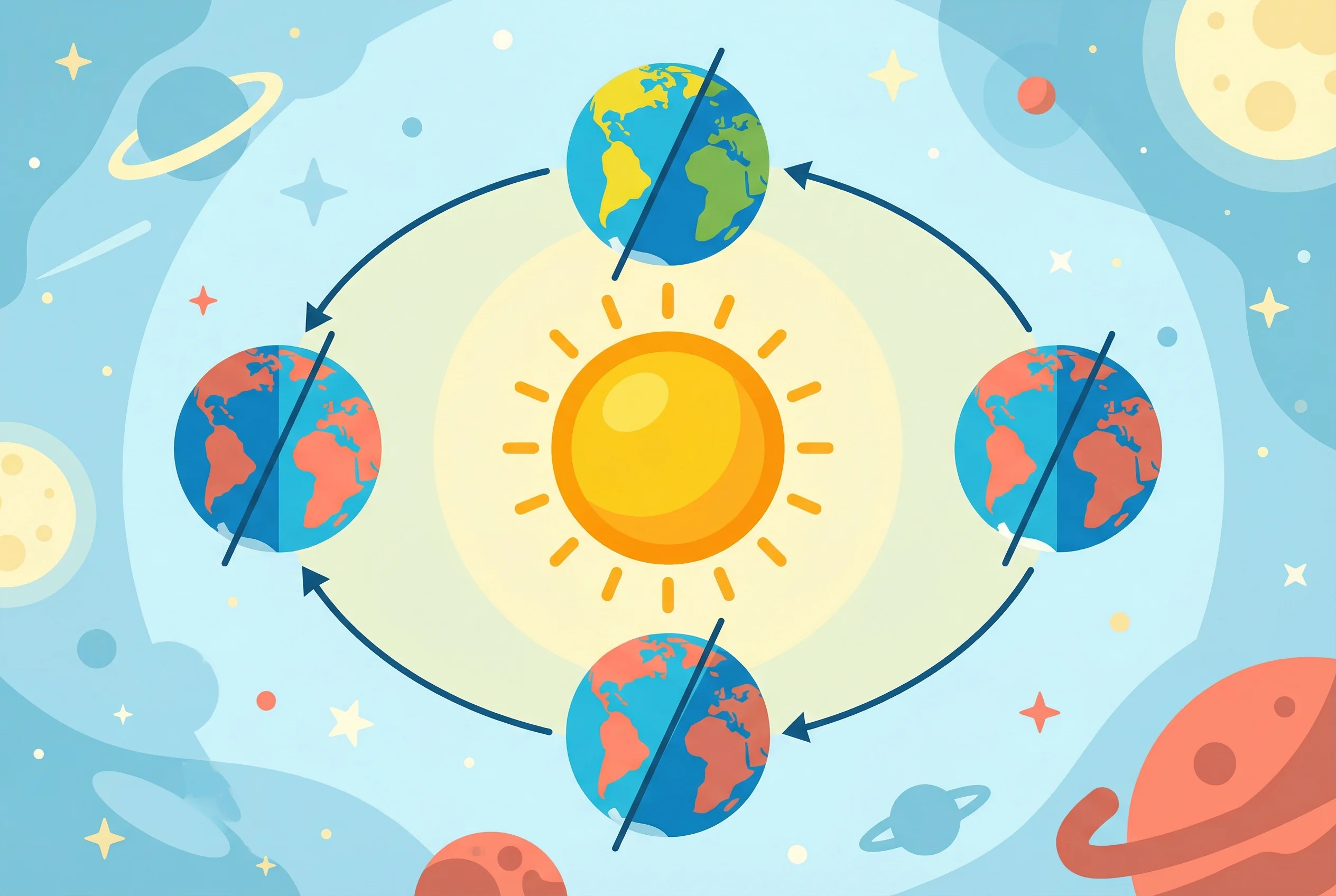
Why do we have seasons?
Medium
Why do we have seasons?
#earth science#astronomy#weather
AEarth's axis is tilted
Correct — Earth's axis is tilted 23.5° from vertical. As Earth orbits the Sun, this tilt means the Northern Hemisphere points toward the Sun in June (summer there) and away in December (winter).
NASA explanation
BThe Sun's heat output changes
Not quite. The Sun does not alternate its heat output to give the two hemispheres opposite seasons. Earth's tilt changes sunlight angle and day length, so one hemisphere gets summer while the other gets winter.
CEarth's speed varies in orbit
Not quite. Earth's orbital speed varies, but speed is not the main seasonal mechanism. The tilt changes how directly sunlight arrives and how long each hemisphere receives it each day.
Answer this question
How do eclipses occur?
Medium
How do eclipses occur?
#astronomy#moon#eclipses
AMoon blocks or enters shadow
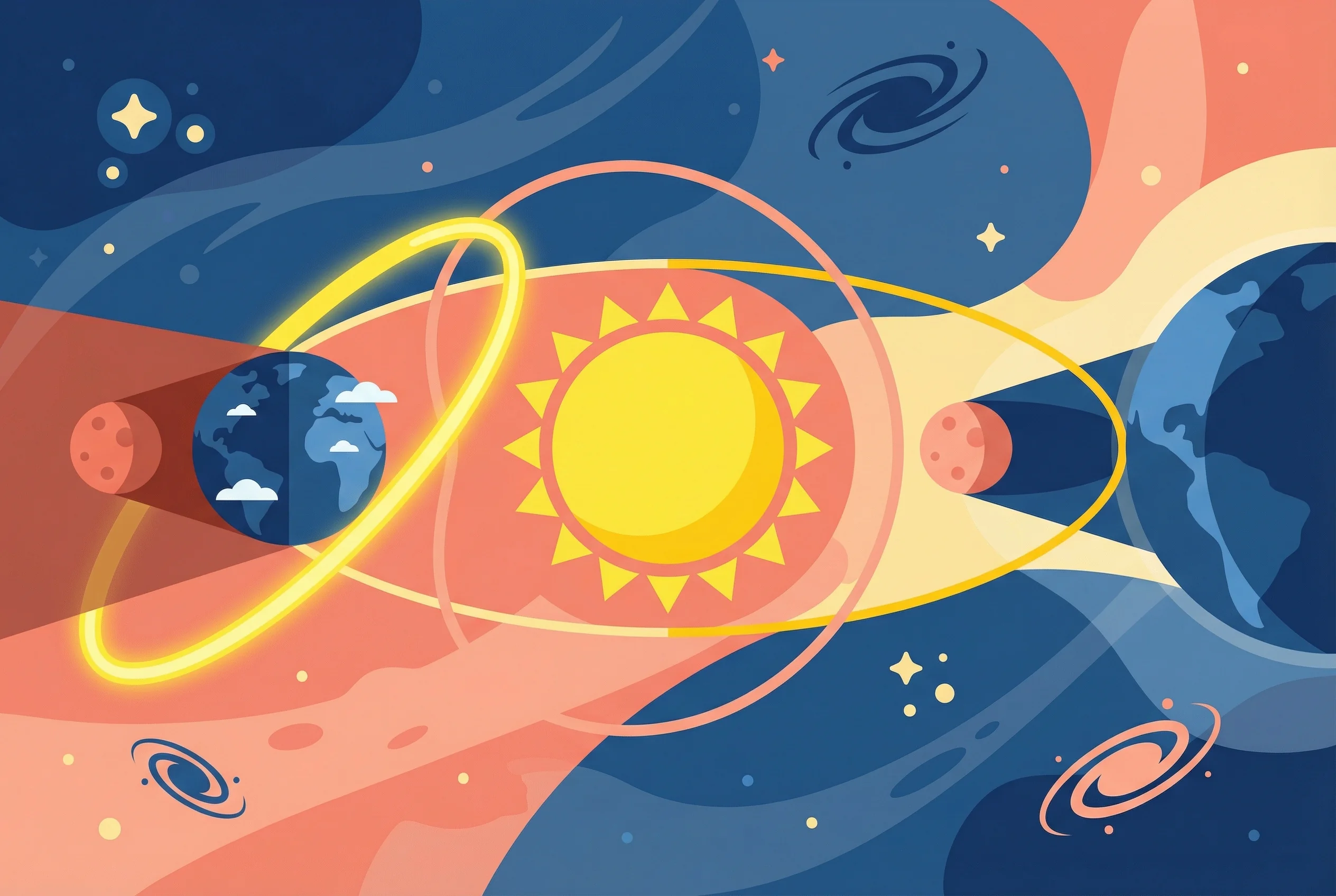
Correct — Solar eclipse: Moon passes between Sun and Earth, blocking sunlight and casting a shadow on Earth. This only happens at new moon when all three align. Lunar eclipse: Earth passes between Sun and Moon, and Earth's shadow falls on the Moon.
NASA explanation
BSun's light dims periodically
Not quite. An eclipse does not require the Sun itself to fade. An intervening body blocks sunlight or moves into a shadow, changing the light that reaches the observer or the Moon.
CEarth's rotation causes them
Not quite. Earth's rotation changes what is above your horizon, but rotation alone cannot produce an eclipse. The Sun, Earth and Moon must also line up so that one blocks light from another.
Answer this question
Why do planets orbit the Sun?
Medium
Why do planets orbit the Sun?
#physics#astronomy#planets
ASun's gravity pulls them
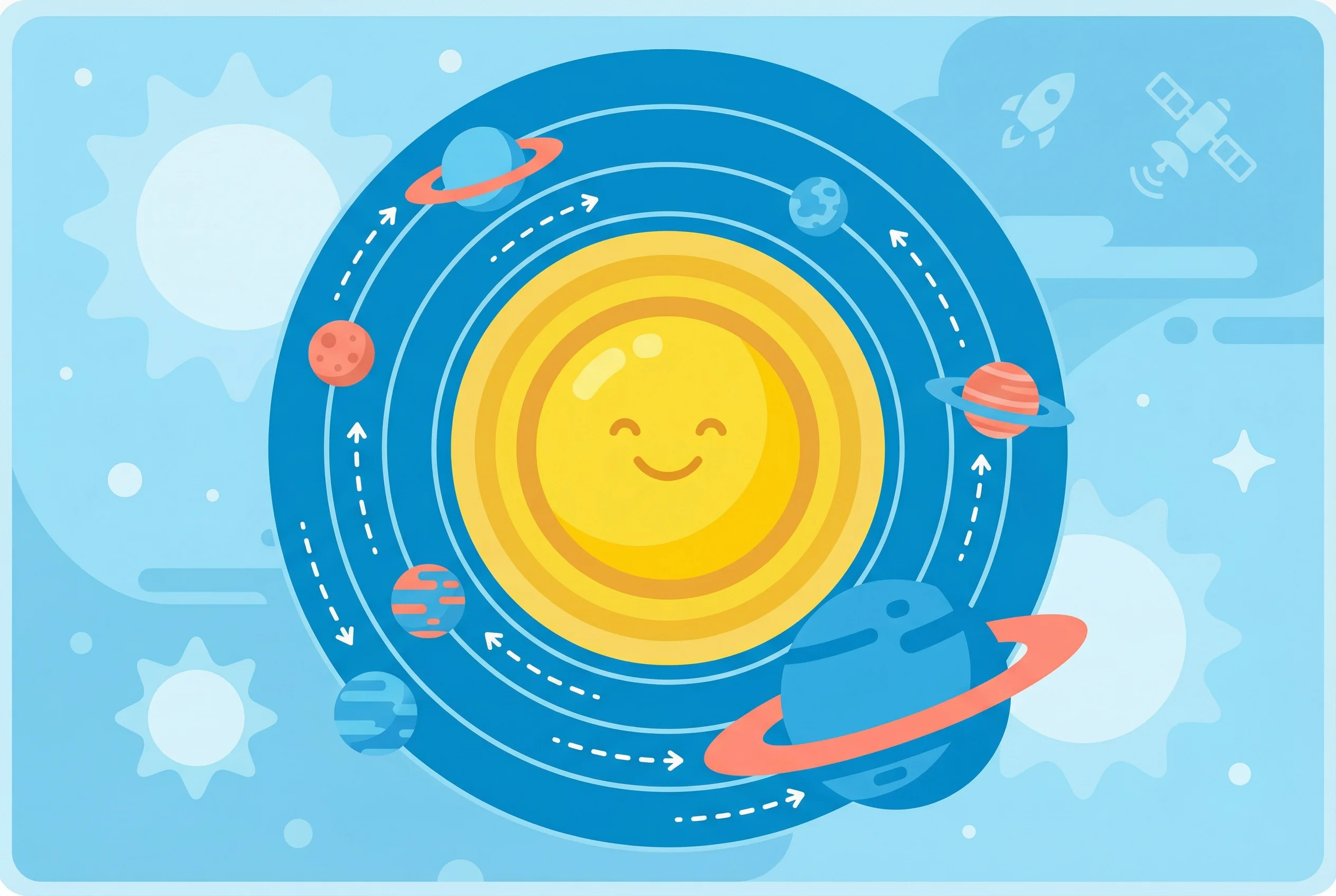
Correct — The Sun contains 99.8% of our solar system's mass, creating enormous gravitational pull. Planets would fly off in straight lines, but the Sun's gravity constantly pulls them inward.
NASA explanation
BMagnetic forces attract them
Not quite. The main force holding planets in solar orbit is gravity, which acts on their mass. A planet does not need a strong magnetic field to orbit the Sun.
CSpace vacuum pulls them inward
Not quite. A vacuum is an absence of matter, not a force that pulls planets inward. Solar gravity bends their motion while their sideways velocity keeps them from falling straight into the Sun.
Answer this question
Why does the Moon affect ocean tides?
Medium
Why does the Moon affect ocean tides?
#astronomy#gravity#tides
AMoon's light heats the water
Not quite. Moonlight is too weak to explain the regular tidal pattern. Tides arise mainly from differences in gravitational pull across Earth, not from heating the sea.
BMoon's gravity pulls the water
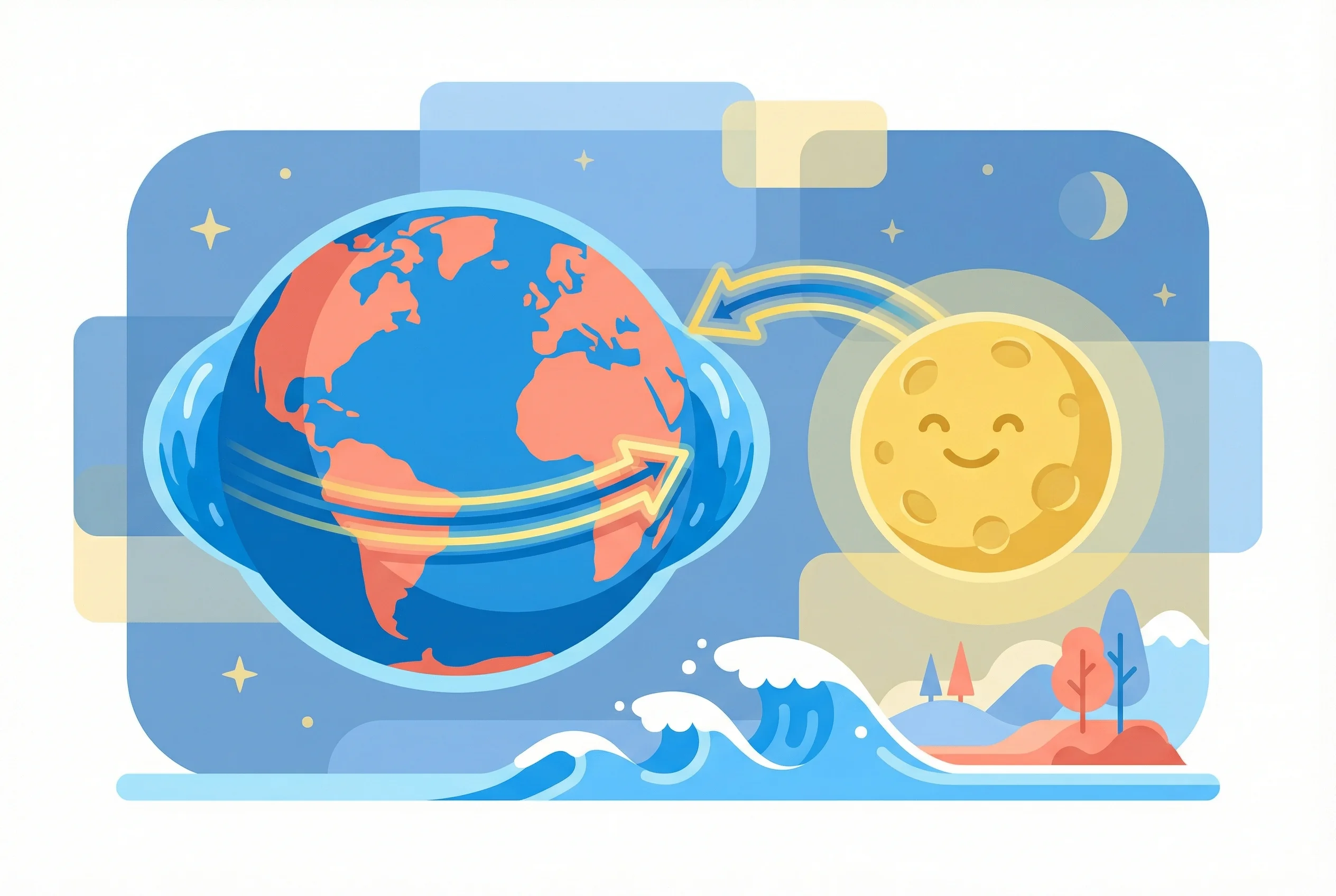
Correct. The Moon's gravity pulls more strongly on Earth's near side than its far side. This difference stretches the ocean-Earth system and helps produce two tidal bulges. Coastlines, ocean depth and the Sun also shape the tides at a particular shore.
NOAA explanation
CMoon's magnetism attracts water
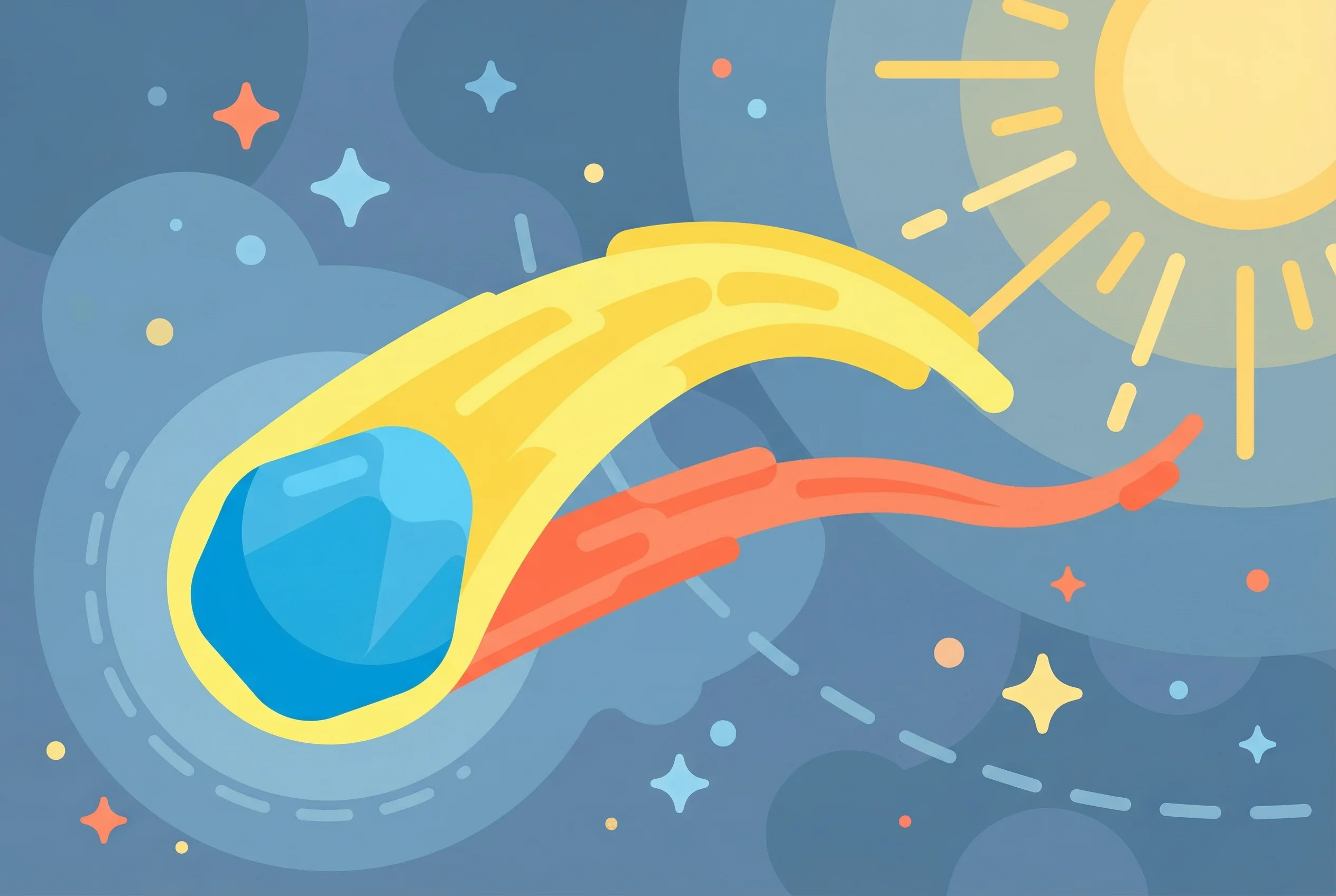
Not quite. The ocean is not pulled into tidal bulges by lunar magnetism. The relevant force is gravity and, specifically, how its strength varies across Earth.
Answer this question
Why do comets have tails?
Medium
Why do comets have tails?
#astronomy#solar system#comets
ASolar wind and heat create them
Correct. Near the Sun, a comet's ices release gas and dust. Sunlight pushes dust into a curved tail, while the solar wind carries ionized gas into an ion tail. The tails extend generally away from the Sun rather than simply trailing behind the comet.
NASA explanation
BThey leave debris behind
Not quite. Comets do shed material, but the tail is not just a trail marking where one has been. Solar heating releases material, and sunlight and the solar wind influence where it goes.
CGravity pulls material out
Not quite. Gravity shapes the comet's orbit but does not explain its Sun-facing versus Sun-away tail pattern. Heating frees gas and dust, and solar effects drive the tails.
Answer this question
Why do asteroids and meteors differ?
Medium
Why do asteroids and meteors differ?
#meteors#astronomy#asteroids
ALocation and size differences
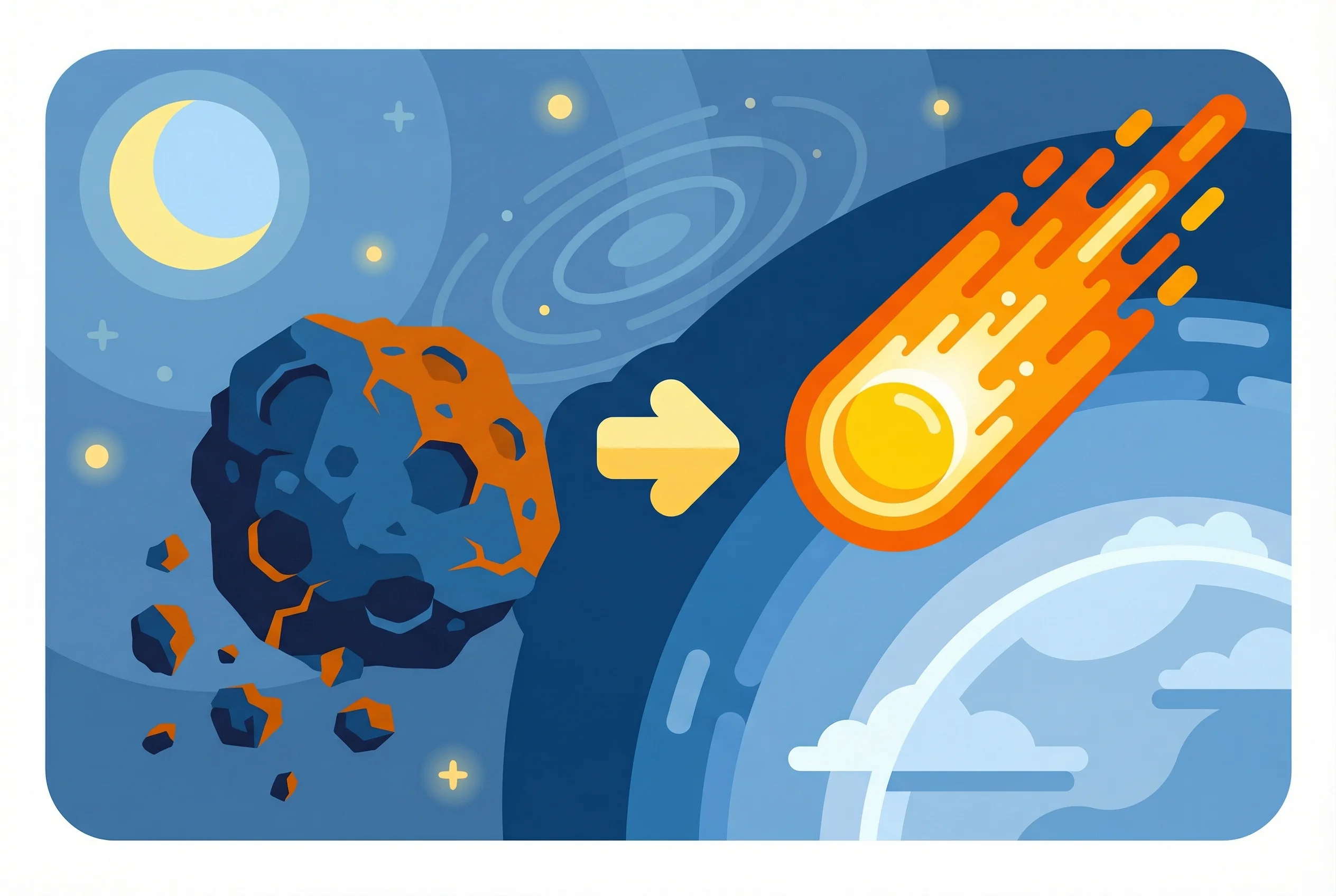
Correct — Asteroids are large rocky objects orbiting the Sun, mostly between Mars and Jupiter. Meteors are the light streaks when space debris burns in Earth's atmosphere. The same rock could be called different names depending on where it is!
NASA explanation
BMeteors are hotter
Not quite. A meteor is the luminous event caused by space material entering an atmosphere. Heating is part of that event, but it does not turn 'meteor' into the name for any hot asteroid.
CDifferent chemical composition
Not quite. Composition varies and can overlap. The distinction here is between a rocky object in space and the streak of light made during atmospheric entry, not a universal difference in ingredients.
Answer this question

Hard

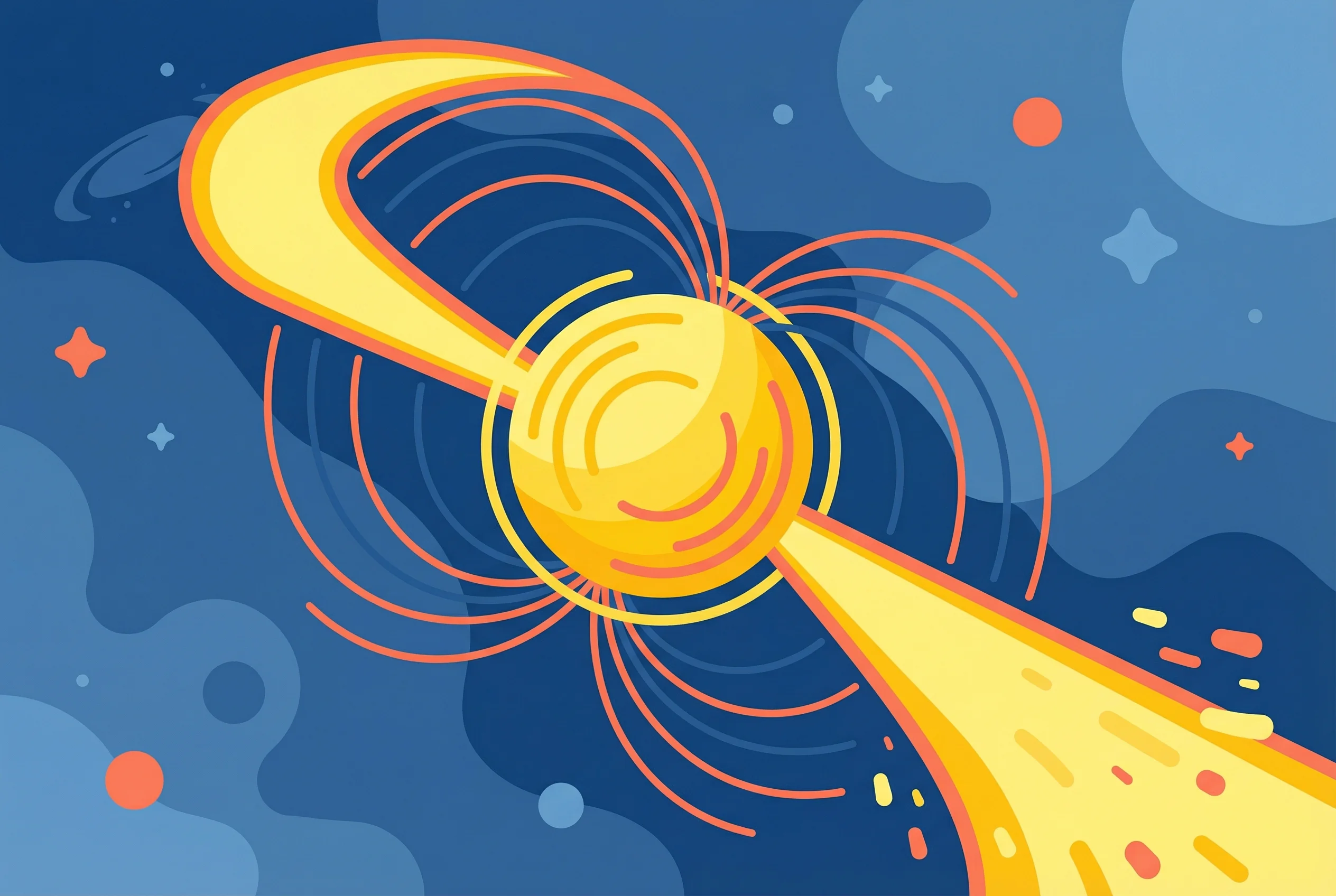
Why do pulsars pulse?
Hard
Why do pulsars pulse?
#physics#astronomy#neutron stars
ANeutron stars rotate with beams
Correct. A pulsar is a rotating neutron star whose radiation is beamed. If a beam sweeps across Earth as the star turns, we detect a pulse, much like seeing a lighthouse beam pass our position.
NASA explanation
BMagnetic fields oscillate naturally
Not quite. A strong magnetic field helps organize the emission, but the regular observed flashes mainly mark a rotating beam crossing our line of sight. They do not require the field to switch on and off each time.
CGravitational waves create pulses
Not quite. The detected pulses are electromagnetic radiation, such as radio waves or X-rays. Gravitational waves are a different phenomenon and do not explain the lighthouse-like beam sweeping past us.
Answer this question
Why is space dark if stars are bright?
Hard
Why is space dark if stars are bright?
#astronomy#cosmology#stargazing
ANot all distant starlight has had time to reach us
Correct. The universe has a finite age, so light from sufficiently distant sources has not had time to reach us. Stars have not shone forever, either. Expansion also stretches distant light toward longer wavelengths. Large gaps between stars alone are not the full explanation.
NASA explanation
BThere aren't enough stars
Not quite. Simply counting fewer stars misses the underlying question: why doesn't every line of sight eventually reach a shining star? The universe's finite history limits which starlight can reach us.
CDark matter blocks light
Not quite. Dark matter is not a black screen that absorbs starlight. It is called dark because it does not interact with light in the ordinary way. It does not account for the dark sky by blocking all the missing light.
Answer this question
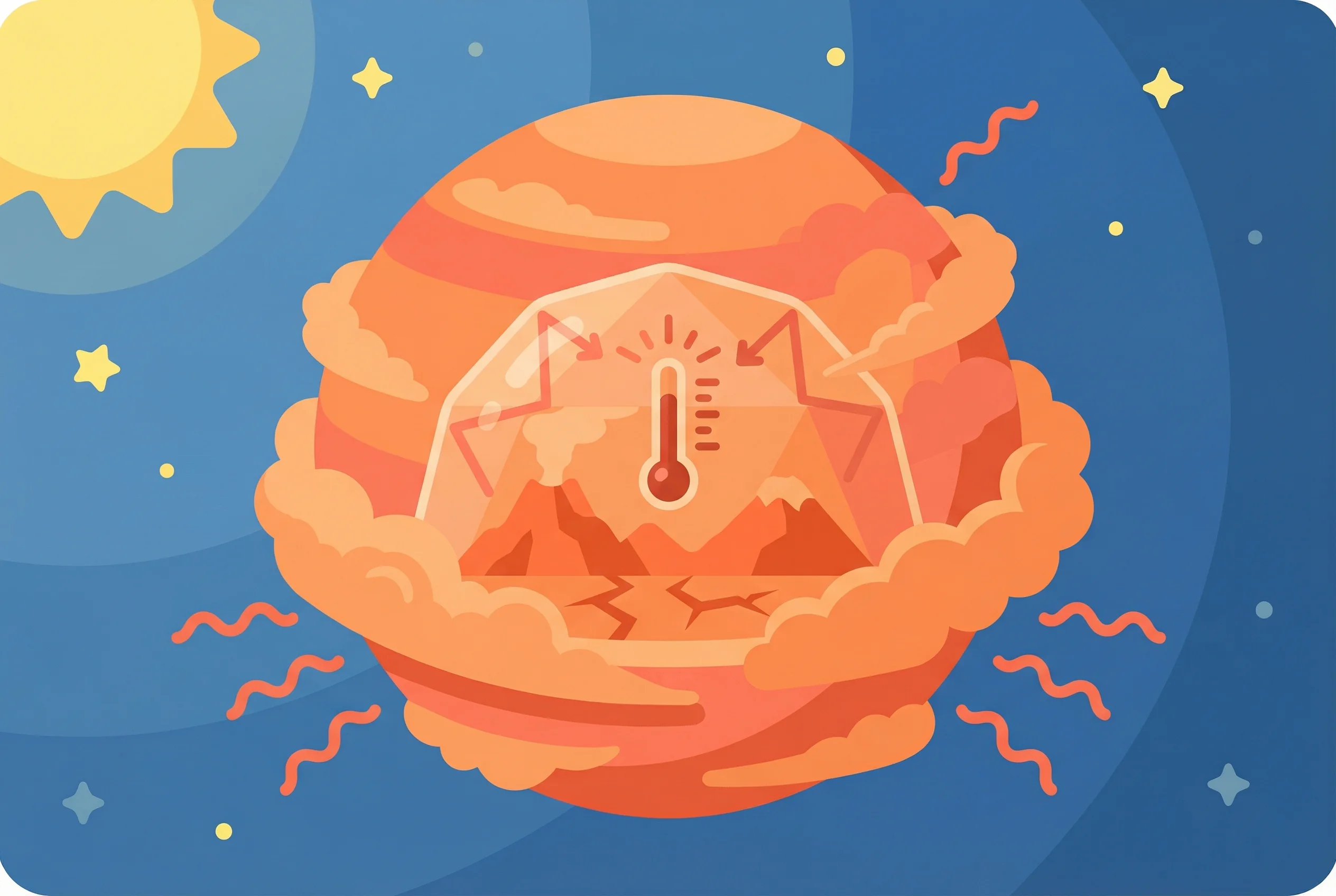
Why is Venus the hottest planet?
Hard
Why is Venus the hottest planet?
#astronomy#planets#extremophiles
AThick CO₂ atmosphere traps heat
Correct — Venus has a runaway greenhouse effect. Its atmosphere is 96% carbon dioxide and 90 times thicker than Earth's - like being 900 meters underwater! Sunlight passes through but heat can't escape.
NASA explanation
BVolcanoes heat the surface
Not quite. Volcanism can supply gases and affect the surface, but it does not explain Venus's sustained planet-wide heat by itself. The dense atmosphere strongly limits how efficiently the surface loses heat.
CIts core is extremely hot
Not quite. Interior heat alone does not explain why Venus's surface is hotter than Mercury's. Its thick carbon-dioxide atmosphere produces an extreme greenhouse effect.
Answer this question
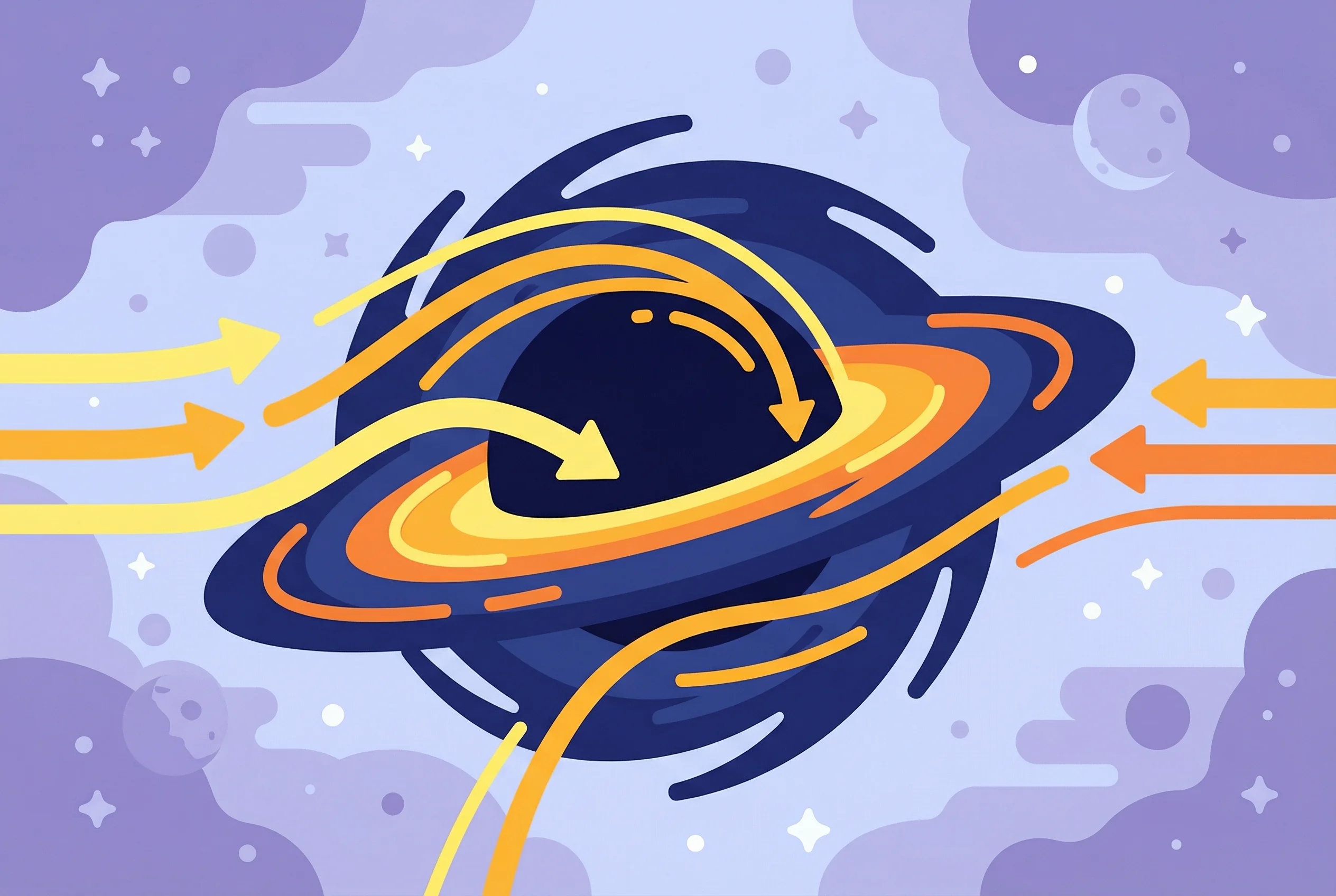
Why do black holes trap light?
Hard
Why do black holes trap light?
#astronomy#cosmology#gravity
AThey absorb light energy
Not quite. An ordinary dark object absorbs light that hits its material. A black hole's event horizon is different: inside it, even an outward-directed light signal cannot escape to a distant observer.
BGravity bends space too much
Correct. Inside the event horizon, spacetime is curved so strongly that all future-directed light paths lead farther inward. Light still travels locally at the speed of light; it has no route out across that boundary.
NASA explanation
CBlack holes are very dark
Not quite. Looking dark is the result, not the cause. A black-painted object can reflect some light and send signals away; a black hole's event horizon prevents light from escaping from inside.
Answer this question
Why do planets appear to wander?
Hard
Why do planets appear to wander?
#astronomy#planets#stargazing
AEarth's wobble causes movement
Not quite. Earth's slow axial wobble changes the sky over long timescales. The familiar retrograde loop of an outer planet instead comes from our moving viewpoint as Earth overtakes it.
BMagnetic fields push them
Not quite. Planets do not need a magnetic push to make a backward loop in our sky. Their ordinary orbits, seen from a moving Earth, create the apparent reversal.
CRelative motion creates patterns
Correct — Ancient Greeks called them 'wanderers' (planetes). From Earth, planets usually move eastward against stars (prograde). But when Earth passes slower outer planets (or faster inner ones pass us), they appear to move backward (retrograde).
NASA explanation
Answer this question
Why do we always see the same moon face?
Hard
Why do we always see the same moon face?
#astronomy#moon#astrophotography
AMoon doesn't rotate at all
Not quite. The Moon does rotate. It turns once in about the time it takes to orbit Earth, keeping roughly the same side toward us. Without that rotation, different sides would face Earth during an orbit.
BTidal locking synchronizes rotation
Correct. The Moon rotates once per orbit, so roughly the same hemisphere stays turned toward Earth. This synchronized motion is called tidal locking. Small apparent wobbles let us see a little beyond half its surface over time.
NASA explanation
CMoon is perfectly spherical
Not quite. A spherical shape does not keep a particular side facing Earth. The matching rotation and orbital periods do; a sphere rotating at another rate would show us changing faces.
Answer this question
Want to play these for real?

Turn questions like these into a 10-second daily quiz that follows your curiosity.

Play live on AIgneous Million Whys →

Frequently Asked Questions

Why can we see the Milky Way?

We are inside it. The Milky Way is our galaxy—we're inside it! The band of light we see is looking edge-on through the galactic disk (100,000 light-years across). We're in a spiral arm ~26,000 light-years from the center.

Why does a year have 365 days?

Time for Earth to orbit the Sun. A year is defined by how long Earth takes to complete one full orbit around the Sun - approximately 365.25 days. This is determined by Earth's orbital distance (93 million miles) and speed (67,000 mph).

Why do stars die?

Nuclear fuel depletes. Stars shine through nuclear fusion—hydrogen fusing to helium in cores. Eventually fuel exhausts. Low-mass stars (like sun): become red giants, shed outer layers (planetary nebulae), leave white dwarf cores.

Why do astronauts float in space?

They're falling with the ship. Astronauts and their spacecraft are constantly falling toward Earth but moving sideways fast enough to keep missing it—that's orbit! Everything falls together at the same rate, creating weightlessness. It's like being in a falling elevator!

Why does the moon have phases?

Sunlight normally illuminates half the Moon. As the Moon orbits Earth, our viewing angle changes, so we see different fractions of that illuminated half. The phase cycle takes about 29.5 days.

Why do we have seasons?

Earth's axis is tilted. Earth's axis is tilted 23.5° from vertical. As Earth orbits the Sun, this tilt means the Northern Hemisphere points toward the Sun in June (summer there) and away in December (winter).

How do eclipses occur?

Moon blocks or enters shadow. Solar eclipse: Moon passes between Sun and Earth, blocking sunlight and casting a shadow on Earth. This only happens at new moon when all three align. Lunar eclipse: Earth passes between Sun and Moon, and Earth's shadow falls on the Moon.

Why do planets orbit the Sun?

Sun's gravity pulls them. The Sun contains 99.8% of our solar system's mass, creating enormous gravitational pull. Planets would fly off in straight lines, but the Sun's gravity constantly pulls them inward.

Why does the Moon affect ocean tides?

The Moon's gravity pulls more strongly on Earth's near side than its far side. This difference stretches the ocean-Earth system and helps produce two tidal bulges. Coastlines, ocean depth and the Sun also shape the tides at a particular shore.

Why do comets have tails?

Near the Sun, a comet's ices release gas and dust. Sunlight pushes dust into a curved tail, while the solar wind carries ionized gas into an ion tail. The tails extend generally away from the Sun rather than simply trailing behind the comet.

Why do asteroids and meteors differ?

Location and size differences. Asteroids are large rocky objects orbiting the Sun, mostly between Mars and Jupiter. Meteors are the light streaks when space debris burns in Earth's atmosphere. The same rock could be called different names depending on where it is!

Why do pulsars pulse?

A pulsar is a rotating neutron star whose radiation is beamed. If a beam sweeps across Earth as the star turns, we detect a pulse, much like seeing a lighthouse beam pass our position.

Why is space dark if stars are bright?

The universe has a finite age, so light from sufficiently distant sources has not had time to reach us. Stars have not shone forever, either. Expansion also stretches distant light toward longer wavelengths. Large gaps between stars alone are not the full explanation.

Why is Venus the hottest planet?

Thick CO₂ atmosphere traps heat. Venus has a runaway greenhouse effect. Its atmosphere is 96% carbon dioxide and 90 times thicker than Earth's - like being 900 meters underwater! Sunlight passes through but heat can't escape.

Why do black holes trap light?

Inside the event horizon, spacetime is curved so strongly that all future-directed light paths lead farther inward. Light still travels locally at the speed of light; it has no route out across that boundary.

Why do planets appear to wander?

Relative motion creates patterns. Ancient Greeks called them 'wanderers' (planetes). From Earth, planets usually move eastward against stars (prograde). But when Earth passes slower outer planets (or faster inner ones pass us), they appear to move backward (retrograde).

Why do we always see the same moon face?

The Moon rotates once per orbit, so roughly the same hemisphere stays turned toward Earth. This synchronized motion is called tidal locking. Small apparent wobbles let us see a little beyond half its surface over time.

What is AIgneous Million Whys?

A curiosity quiz app that turns everyday questions into 10-second moments of understanding — every answer comes with the why behind it.

Are these space trivia questions free to play?

Yes. You can play these and thousands more, free, in the AIgneous Million Whys app.

How is it different from other trivia apps?

Every answer includes a short explanation of why it is true, and the daily quiz follows whatever you are curious about.